The walled garden that’s breaking down barriers

Welcome to the July edition of the Open Home Foundation newsletter, the place to learn about the latest and greatest things for your smart home that improve its privacy, choice, and sustainability.
The Open Home newsletter is written by Paulus Schoutsen – President of the Open Home Foundation, and founder of Home Assistant. Was this email forwarded to you? Subscribe here!
I’m always looking for examples of our projects being used in novel ways. This month I found one in a most unexpected place, which got me thinking about who the Open Home really works for...
The walled garden that’s breaking down barriers
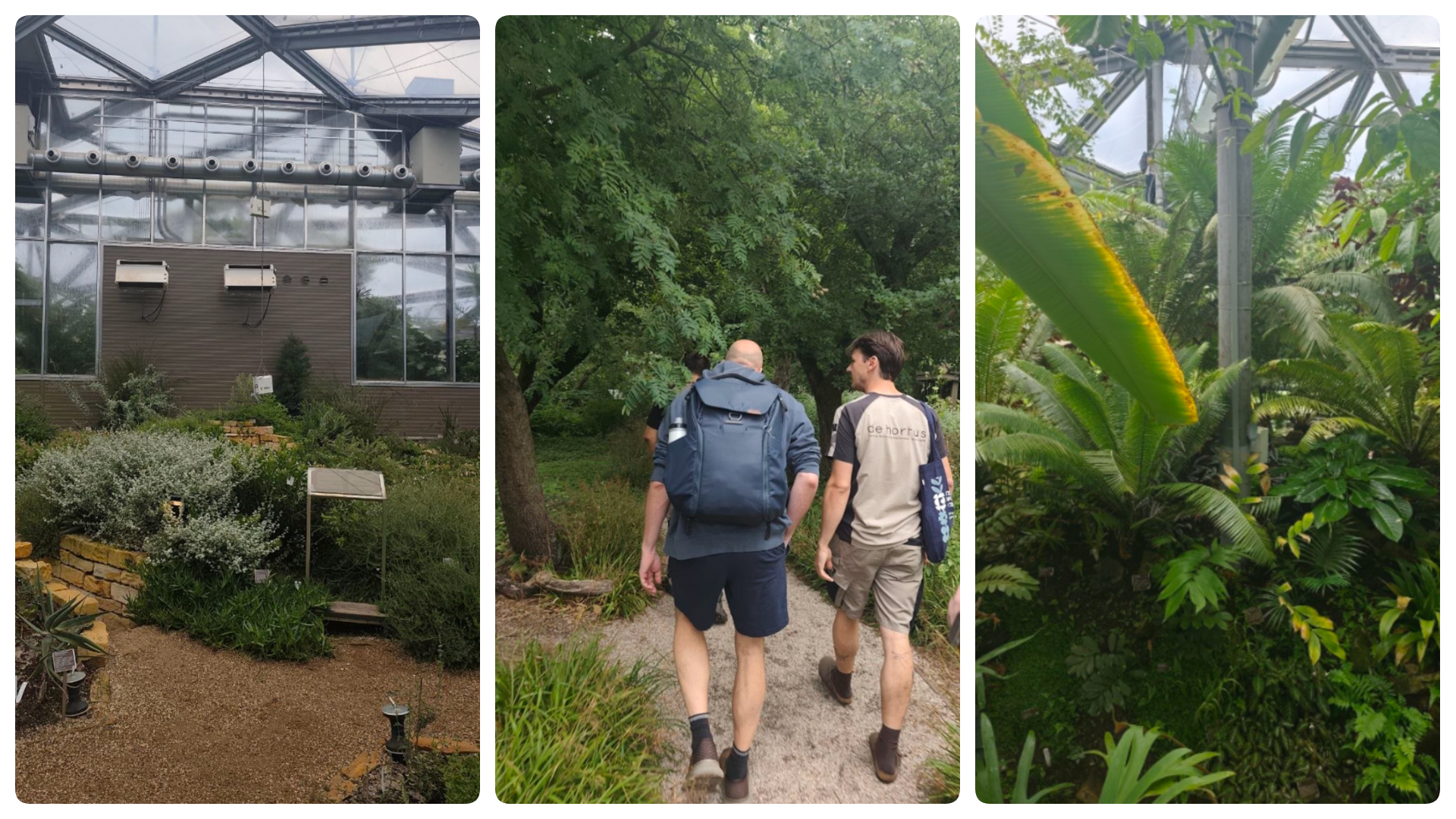
Ducking under broad tropical leaves, brushing by ferns dripping with condensation, through a steamy greenhouse that smells of warm earth: it’s not where you’d expect to find Home Assistant in action. But among the 6,000 plant species of Amsterdam’s Hortus Botanicus (one of the oldest botanical gardens in the world, founded in 1638) there it is.
So how did Home Assistant, and I, end up here? It all started a few weeks ago, when I stumbled across a blog post by Willem Vooijs, the garden’s former IT manager.
The “sole sysadmin” trap
He told a tale of familiar frustration: a historic site packed with different proprietary climate systems, each operating in isolation. When a primary heat pump failed, a backup gas boiler quietly kicked in to keep the rare tropical collection from freezing. But because the systems didn’t communicate, nobody knew anything was wrong until they saw smoke coming from the boiler room…
This is what happens when proprietary systems are closed off: they hide their status from the people who actually use the building. To make sense of the chaos, you’re forced to rely on a dedicated technical translator (in this case Willem) to fix things. And that’s how you fall into the “sole sysadmin” trap.
That’s why one of our goals at the Open Home Foundation is to make smart home technology more approachable. You shouldn’t have to be an IT specialist just to understand the building you live or work in. True approachability means building tools that invite everyone in, rather than keeping them out.
Sowing the seeds of approachability
Willem understood this. He didn’t want to be a gatekeeper – he wanted to empower his colleagues so they could confidently run, understand, and grow their own workspaces, whatever their technical background.
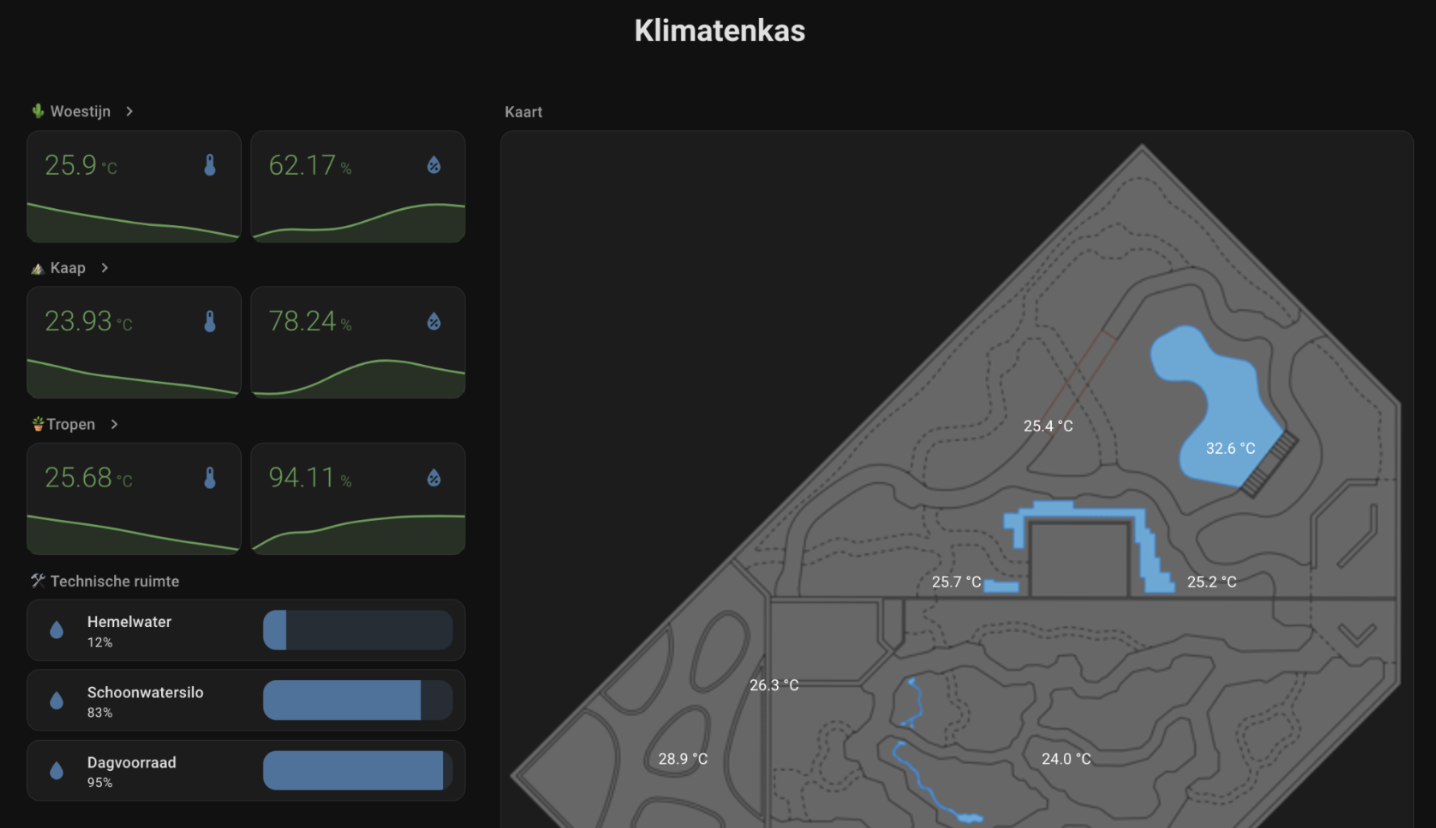
So he introduced Home Assistant. He started by sowing small seeds of convenience: solving the fact that reaching physical light switches was a hassle, and integrating data from the native rainwater collection system so water levels could be monitored more easily. Two years later, and those seeds have grown into a 400-device ecosystem.
Reading about a setup like that is one thing, but I wanted to see it in the wild. Which is how I found myself standing in that humid greenhouse.
Welcome to the jungle
The Hortus Botanicus is, quite literally, a walled garden – a term that, in our industry, is usually an insult. It refers to the closed ecosystems that Big Tech design to lock you in, hold your data hostage, and force you to buy only their approved accessories. But inside these ancient walls, everything is wide open.
A woodworker can glance at a screen in the cafeteria to check the water reserves. A gardener can see why a greenhouse temperature dipped overnight. Willem has since moved on to pastures new, but the digital ecosystem he cultivated is still thriving, now tended to by the people who need it most – many of whom have started using Home Assistant in their own homes. In fact, lots of the staff I met were excited to show me what they’d built via the dashboards on their phones!
Cutting through the canopy
Of course, nature always finds a way (to block your signal) 🌱 As you may imagine, dense, moisture-laden foliage is effectively a brick wall for standard Zigbee signals, and the garden’s hefty masonry doesn’t help. During my visit, the Hortus crew mentioned their biggest hurdle right now is signal strength.
We want to help the team build a bulletproof repeater network to blanket the grounds, boosting the signal around the property using strategically placed antennas running repeater firmware… It’s something I’m sure our community will be ready, willing and able to help with, so follow our Home Assistant social channels for more on this challenge coming soon!
The Open Home Foundation’s first annual report
Did you know our very first Annual Report is online? It’s a milestone I’m really proud of. All this started as a passion project for me, and it’s amazing to see how far we’ve come. Publishing a formal annual report feels like proof we’re building something that’s making a real impact. In the true spirit of building in the open, it covers everything we did in 2025: what worked, what didn’t, and what we learned. But it’s not just about the past, it offers an exciting look at where we’re headed, this year and beyond. We want the Open Home Foundation to be approachable and accessible to everyone in our community, not just the active contributors or technical experts. That means investing in people as well as projects: find out how below.
A new way to unlock your creativity with ESPHome
You’ve probably got the message that we’re focusing on approachability this month, but while I always enjoy talking about the theory, putting it into practice is even better. Step forward the new ESPHome Device Builder. Introduced as part of version 2026.6.0, it replaces the old dashboard with a visual workspace that guides you through building your own smart home devices without needing to write code, or have 20 browser tabs open. YAML still works if that’s your thing. But now it doesn’t have to be. Read all about it on the new ESPHome blog.
Check out the preview of our device database!
Back in February we invited Home Assistant users to share anonymized device data to help us build a “Wikipedia” of smart home devices based on real-world usage. The aim: to give people the information they need to benefit from privacy, choice, and sustainability in their smart homes. Today, the preview is live. It’s early, unpolished, and doesn’t even have an official name yet… but that’s exactly why we want your input! Read all about it, give it a go and tell us what you think.
Home Assistant 2026.7: Accessible automations
The headline of the latest release says it all: automations that speak your language. Instead of starting from Home Assistant’s internals, simply describe what you want in plain terms: “when the bedroom drops below 18°C, turn on the heating.” No technical traps or coding required. Tune into the release party for the full picture.
IoTorero enters the ring
A new Works with Home Assistant partner – and a first for the program! IoTorero’s smart plugs and relays arrive pre-flashed with ESPHome, meaning they connect to Home Assistant out of the box, no setup or fuss required. Read the full blog to see if they’re right for you.
Community meetups

A tale of two tables
Last month saw what we believe was the first Home Assistant meetup in Budapest, Hungary: as evidenced in the above pic by host Péter Zsák. If you’re wondering about the slightly unusual seating arrangements (as we did!), the explanation is rather charming: they started with two tables, but as more people arrived they built them around István Balajti, who was in the middle of a story too good to interrupt. He eventually moved outside to join the full circle, creating a veritable Round Table of Home Assistant enthusiasts 🏰
If this inspires you to get together with likeminded open source enthusiasts to talk all things smart home, check our Luma meetup calendar. If you live around Kyiv or Sydney, sign up now! You can also set up your own event.
Say hi to us at IFA 2026!
Most of the spots at our Berlin meetup during IFA 2026 were reserved quickly – so if you’re planning to attend this mega home and consumer tech event from 4 to 8 September and would like to say hello, you still can by visiting our booth: find out what we have planned on our blog!
Help us build the Open Home
If you can’t make it to a meetup, never fear: there are lots of other ways to join our fight for privacy, choice, and sustainability in smart homes!

Shop our store
Show your love for our principles and projects with our range of high quality, ethically made apparel and accessories.
Support our work
Subscribe to Home Assistant Cloud or buy official Home Assistant or ESPHome products from our commercial partners.
Share your skills
Contribute code, translations, documentation, or designs to any of our projects – or sponsor a maintainer directly on GitHub or Ko-Fi.
Good news for ESPHome and Music Assistant fans!

You can now buy T-shirts featuring your favorites, along with a new Home Assistant design, from our store. All in classic black (or Dark Mode, as I like to call it) 🖤 Timeless, versatile, and built to last – just like the projects on the front. And best of all, every purchase helps fund the work of the foundation.
In the news this month

We celebrate helping open up Android
When the EU Commission invited us to share our experiences as part of its consultation on Android interoperability, we had plenty to say. Google’s restrictions on Android, such as limiting wake word detection to its own Gemini assistant, meant our software engineer Timo had to spend a lot of time and effort creating a workaround for users. Our community deserves better. So I’m delighted to say the commission listened: to us and the other orgs that contributed! Last week, it ruled Alphabet (Google’s parent company) must open up 11 Android features – including always-on wake word detection, ambient sensor access, and screen automation – to all assistants, on equal terms. What this means for Home Assistant, and the story of how we got here, deserves a blog of its own: watch this space. In the meantime, we’re celebrating 🥳
Meet Latis: Your home’s new uninvited guest
US broadband provider Spectrum has just launched Latis: a platform that harvests behavioral signals from 30 million US households and 500 million connected devices, selling a “continuously evolving view of household state and intent” to advertisers and AI companies. They call it privacy-forward. I call it creepy, and why privacy matters in your smart home.
The Open Home on air!

I recently joined brothers Matt and Sean Ferrell on their Still TBD podcast, to discuss why I started Home Assistant, how it compares to Alexa or Google Home 😏 and whether a “normal” person can actually run it. The last question is one I think about a lot... as you may have guessed. Have a listen and let me know what you think.
Shark attack on your privacy
Remember the Yarbo lawnmower hack from our May issue? This news may make your Jaw(s) drop further 🦈 Security researcher tokay0 found a critical vulnerability in millions of Shark robot vacuums – dubbed as “hackable cameras with wheels” – that lets anyone execute code, access the live feed, grab Wi-Fi passwords, and pull maps of owners’ homes. Apparently SharkNinja has known about this since March, yet it wasn’t patched until this week. We’re gonna need a bigger newsletter for all these privacy horror stories…
AirGradient form a foundation
Taking a leaf from the Open Home Foundation’s book, Works with Home Assistant partner AirGradient have launched the Open Air Foundation in Switzerland to steward their open source air monitor designs and software. Kickstarted with 5,000 monitors and 100,000 USD from their own pocket, the Open Air Foundation’s mission is to build practical public infrastructure for airborne environmental health: bringing tools, training, data, and grants to under-monitored communities. We love to see an open source project built for positive impact! 🎉
OpenAI’s smart home companion gets more… personal
Back in March we gave a rather “meh” verdict on OpenAI’s upcoming smart home device. Now more detail has emerged: a screenless, portable speaker designed by Apple’s former chief designer Jony Ive, pitched internally as a “humanlike AI companion that lives in the home” with a “personality.” Apparently it’ll have access to your emails, too 👀 When I said I wanted the smart home to be more approachable, this wasn’t quite what I had in mind...
Community highlights
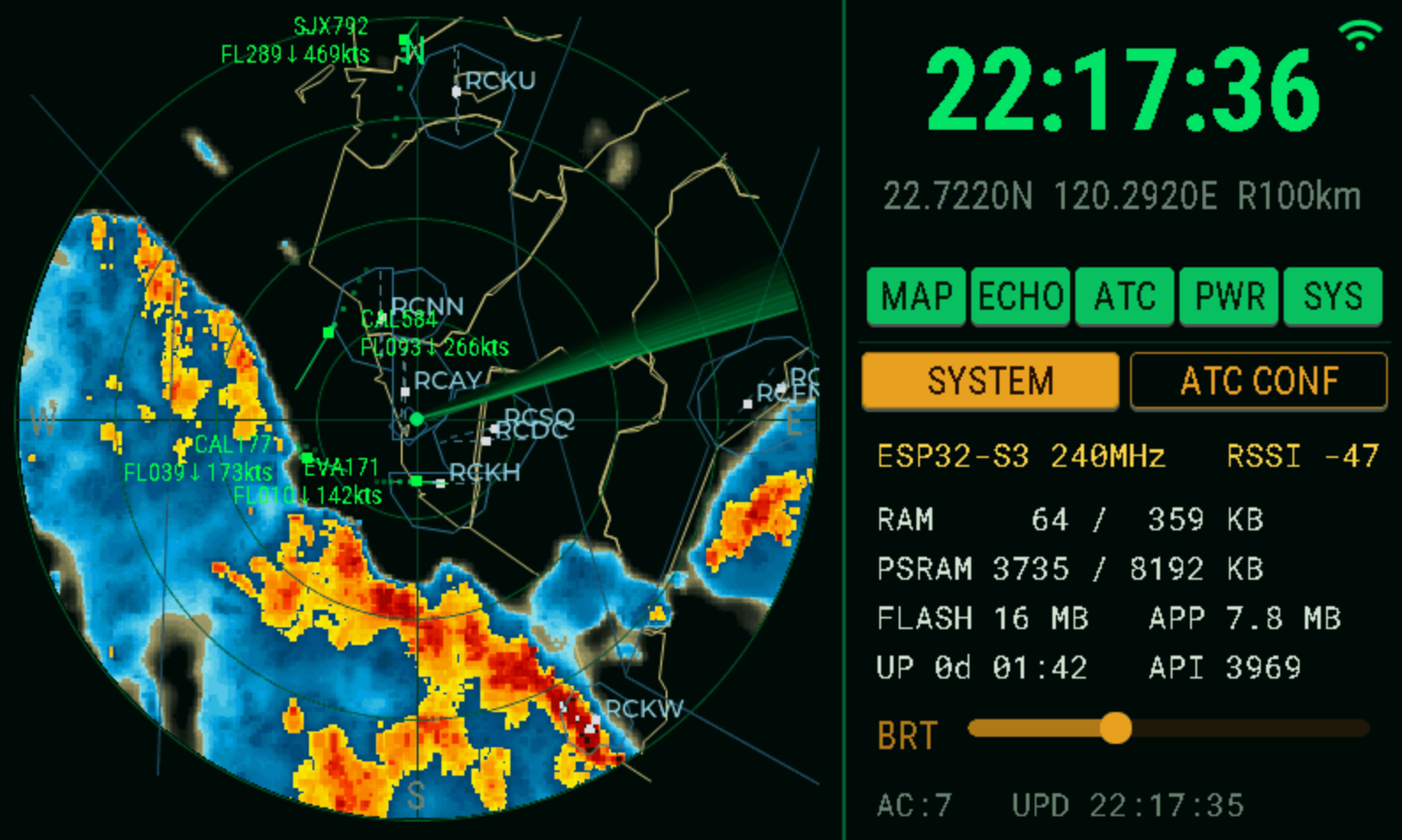
Delphicchen built a live flight radar on their desk using ESPHome. It also doubles as an alarm clock. Because why not?!
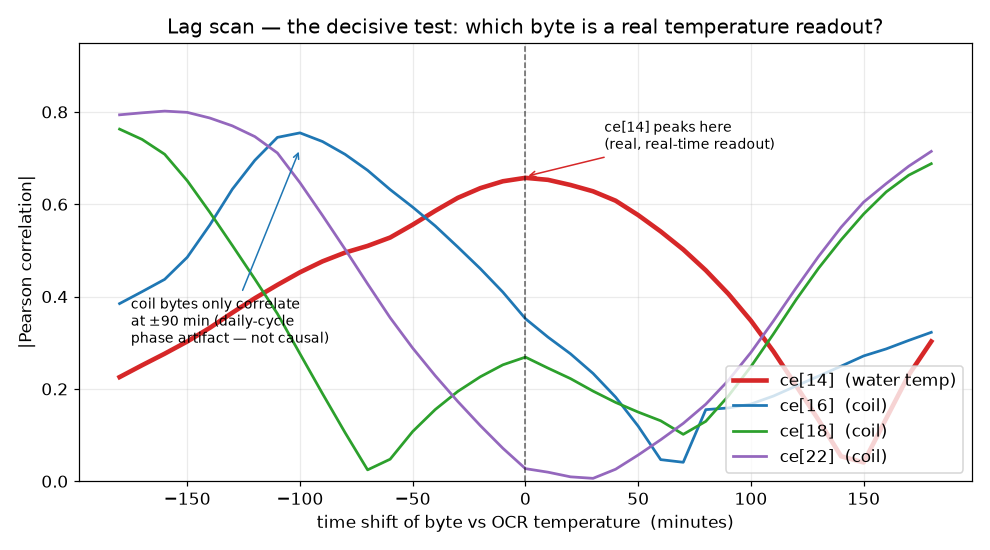
Splattner reverse-engineered a heat pump’s internal bus with a €5 ESP32, found a solar PV mode hiding in the firmware of the cheaper model, and turned the whole thing into an ESPHome integration for anyone to use 🙌
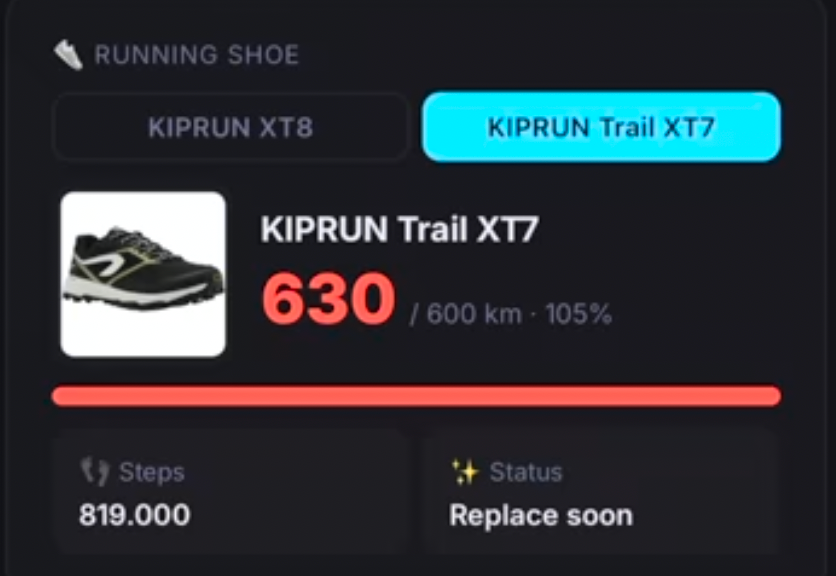
Never sure when to retire your runners? Smart Home Maker built a Home Assistant tracker that automatically logs mileage and flags when it’s time for a new pair 👟
Connect with us
Hit reply to say hi, or find us on your favorite platform...
|