Research as an antidote to ‘software brain’

Welcome to the May edition of the Open Home Foundation newsletter, the place to learn about the latest and greatest things for your smart home that improve its privacy, choice, and sustainability.
The Open Home newsletter is written by Paulus Schoutsen – President of the Open Home Foundation, and founder of Home Assistant. Was this email forwarded to you? Subscribe here!
To build a smart home that actually works for people, we have to understand them. This month, I’m looking at why talking to our community is one of our most vital tools for success...
Research as an antidote to ‘software brain’
I recently read a great piece by The Verge’s Nilay Patel, where he argues we’re living in an era of “software brain”: a worldview that fits everything into algorithms and efficiency loops. The trouble is, it’s all built on the mistaken belief that the rigid rules of code can be applied to the real world – forgetting that the actual experience of being human is messy, emotional, and not like code at all!
Nilay Patel, The Verge
In contrast, at the Open Home Foundation we believe technology should pass the “human test,” something our Product Manager, Laura Palombi, talked about at State of the Open Home last month: thinking as a human is thinking and not as a machine wants you to think. If a smart home makes you feel like a guest in your own house, or requires a degree in computer science just to turn on the lights, it has already failed.
Looking beyond code
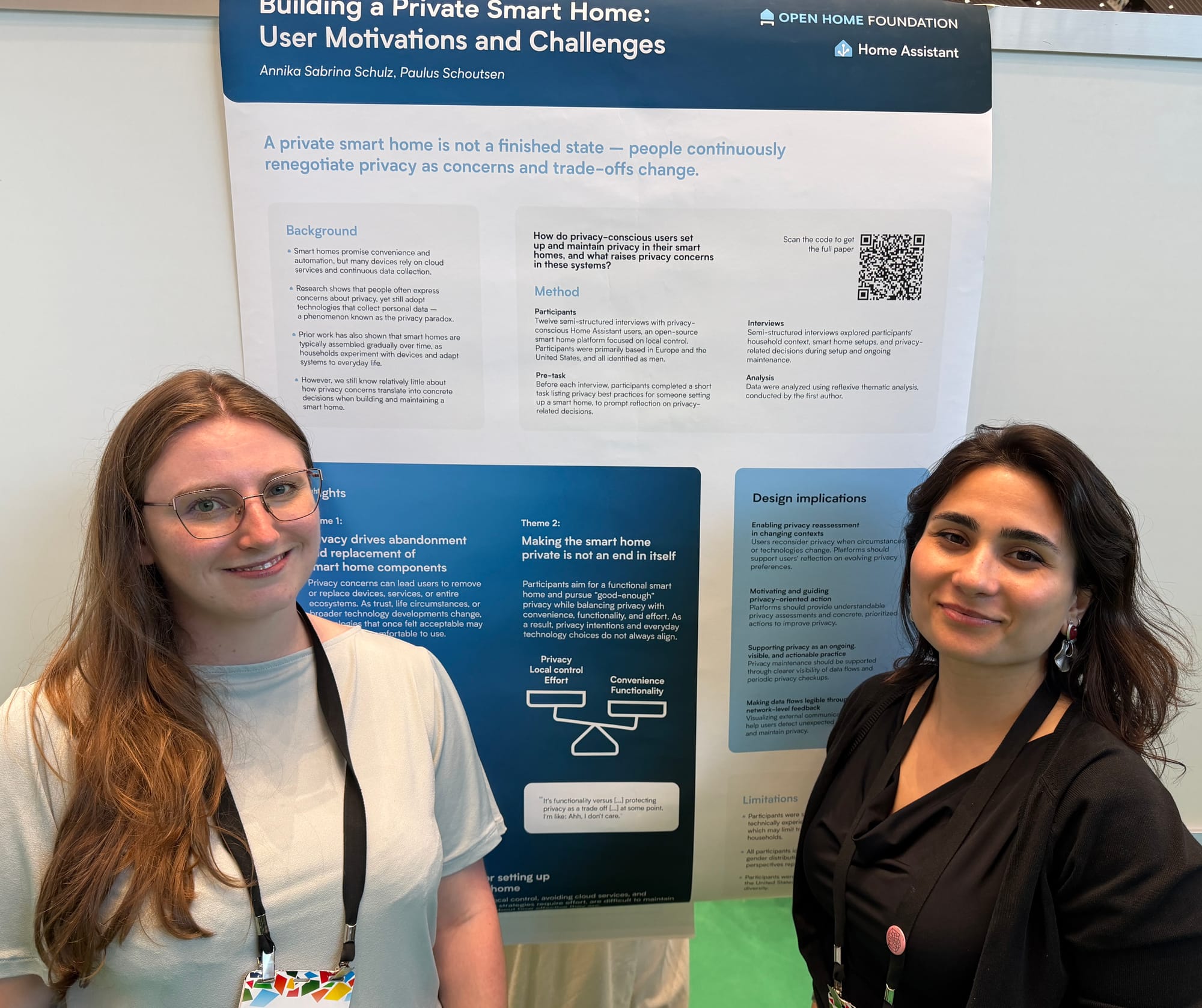
To build a home that passes this test, we have to look beyond code. That’s where research becomes really important. We have two PhDs in Human-Computer Interaction, Idil Bostan and Annika Schulz, on our team. Their job is to bridge the gap between “tech” and “human.” While engineers look at how devices connect to a network, Annika and Idil talk to the people using them, to discover how they actually perceive the logic and flow of their own homes.
This kind of real-world evidence is frontline in our fight for privacy, choice, and sustainability for smart homes and, crucially, how we can build devices that are approachable for everyone.
Setting the standard
The results are already gaining attention: earlier this year, Annika and I co-authored our very first peer-reviewed paper Building a Private Smart Home: User Motivations and Challenges, which she and Idil recently presented at the global ACM (Association for Computing Machinery) CHI conference in Barcelona.
It was a chance to show the wider industry that privacy isn’t an obstacle to innovation. For years, Big Tech has hidden behind the “Privacy Paradox”: the idea that people say they care about privacy, but don’t act on it. Our research shows real life is more complex than that, and privacy concerns can actually drive people away from technology. By demonstrating that users thrive when they feel in control, we’re helping to set a new, more inclusive, standard for the future of the smart home.
Find the full story about the paper – and how Annika and Idil are using their research to keep our mission on track – on our new Open Home Foundation blog.
Why we’re backing OpenDisplay
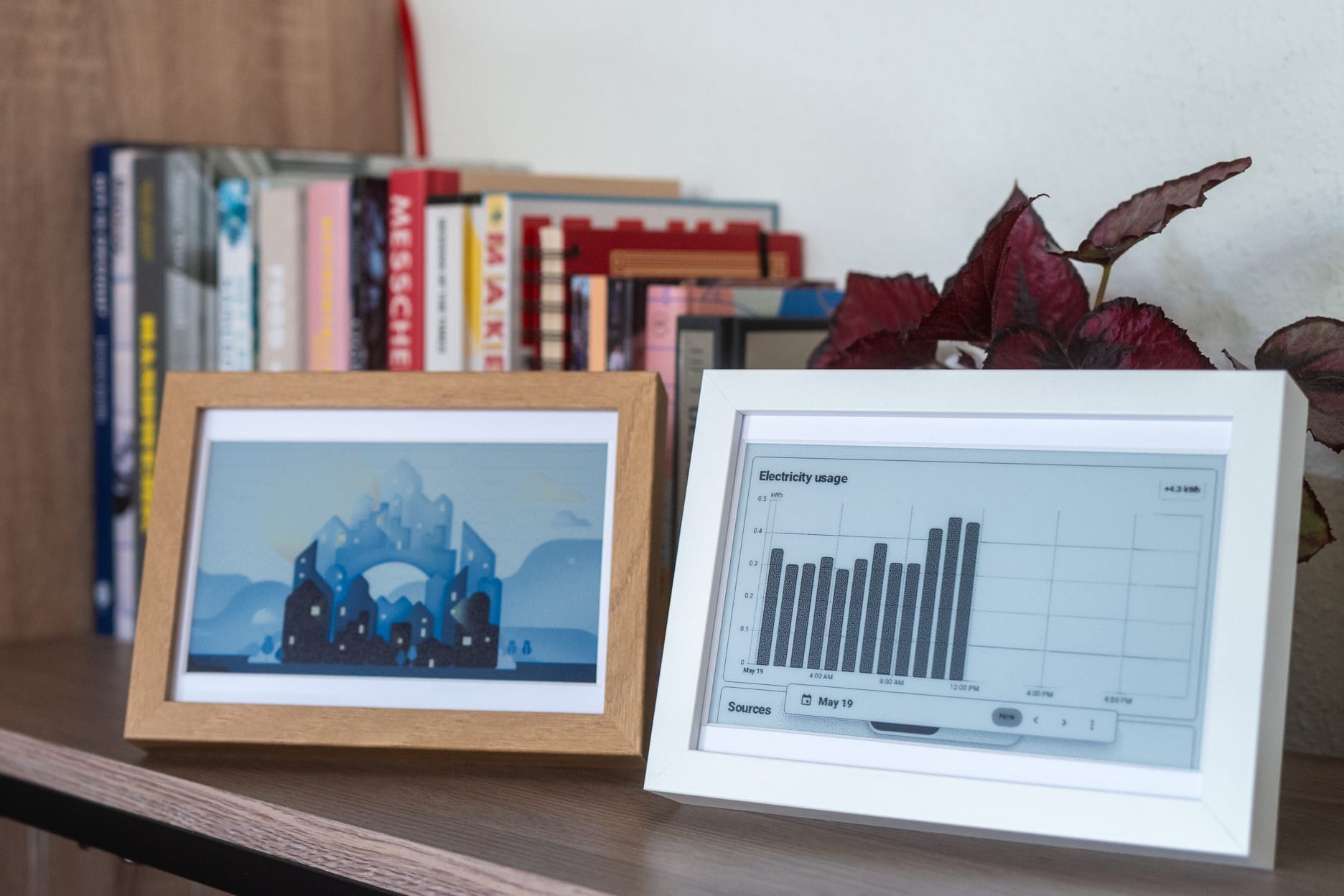
We’re big fans of e-paper at the Open Home Foundation – and judging by the cool projects our community builds with it, so are you! That’s why I’m thrilled to announce OpenDisplay as a new collaboration partner. This open standard makes it easier than ever to build low-power smart home displays that don’t look like glaring screens. 😎 Discover why I think they’re a great fit for us on our blog!
Home Assistant 2026.5: On the same frequency
There’s plenty to explore in the latest Home Assistant release – but we’re particularly excited about native RF support, which already has me looking at bricked devices in a whole new light. More on that in a future issue… Watch the release party below to see everything that’s new.
Treble the partners, treble the choice
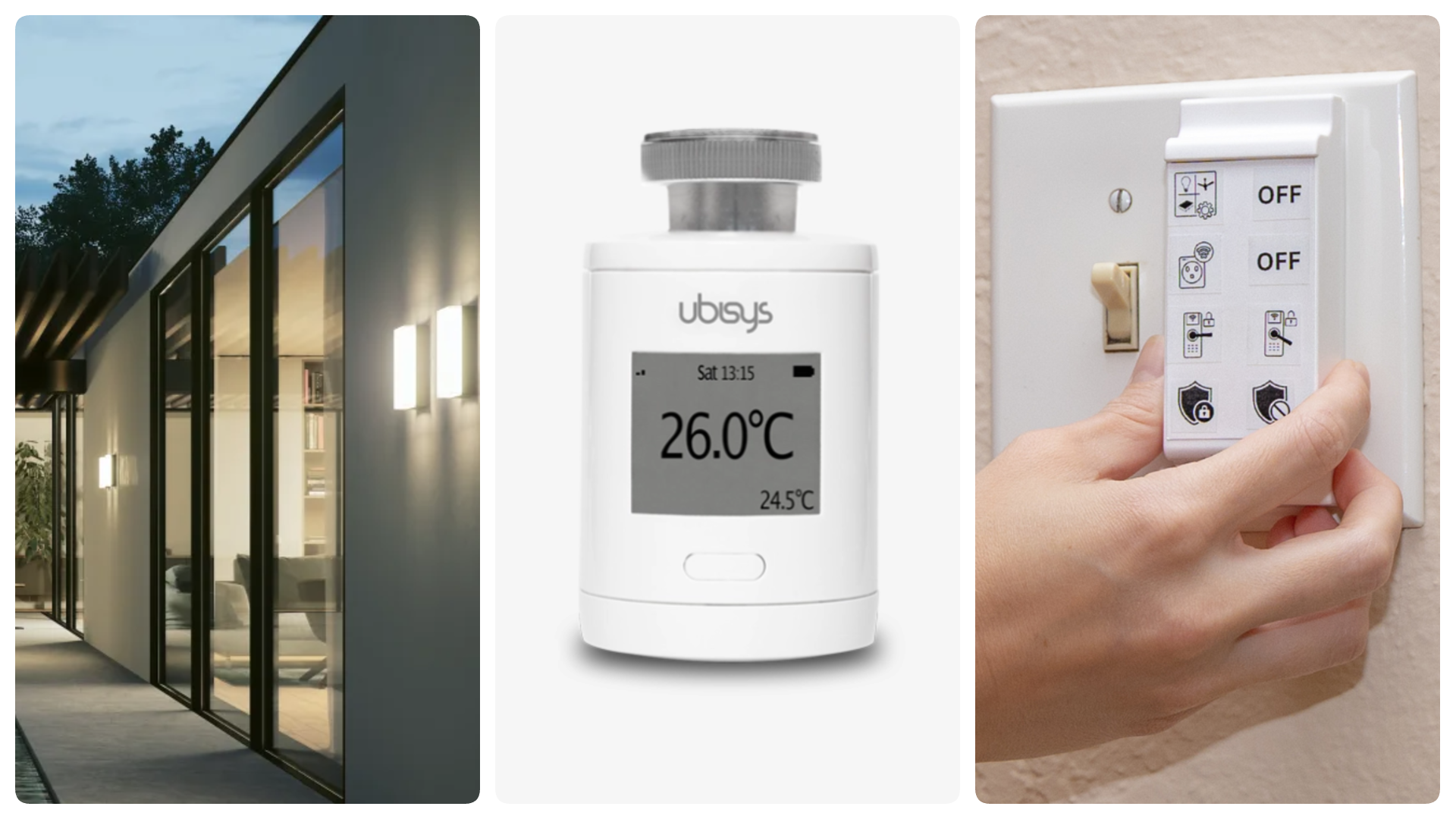
There’s not one, not two, but three new Works with Home Assistant partners to tell you about this month! Yes, our testing team have been busy certifying stylish luminaires from BEGA: a German architectural lighting firm whose inclusion doubled the number of products on our certified device list overnight! Then there’s Ubisys, who bring a range of Zigbee devices designed to help you retrofit your home, and last but not least zunzunbee and their Slate Switch battery-powered smart scene controller that snaps over existing wall fittings. Welcome all!
Community meetups
Summer must be on its way in Europe, since things are heating up on the meetup front. 😎 So if you live near Perpignan, Stockholm, Hasselt, Cologne, Newcastle, or Kyiv, sign up now!
I’m also stoked to say I’ll be in Rome on 27 May for a meetup hosted by the Nabu Casa crew, before heading to Oslo for a special “Meet the Home Assistant Team” event on 28 May. I can’t wait to say “ciao” and “hei” in person! 🇮🇹 🇳🇴 If you’re interested in setting up your own event, learn more here.
Meetups aren’t the only places where you’ll be able to talk to the team and other community members: we’ll be at IFA 2026 in Berlin, from 4 to 8 September. It’s the world’s largest home and consumer tech event, so what better place to spread the word about our fight for privacy, choice, and sustainability? We’re planning on making our booth a welcoming space where weary attendees can take some time out for a chat – watch this space for more details!
Help us build the Open Home
If you can’t make it to a meetup, never fear: there are lots of other ways to join our fight for privacy, choice, and sustainability in smart homes!

Shop our store
Show your love for our principles and projects with our range of high quality, ethically made apparel and accessories.
Support our work
Subscribe to Home Assistant Cloud or buy official Home Assistant or ESPHome products from our commercial partners.
Share your skills
Contribute code, translations, documentation, or designs to any of our projects – or sponsor a maintainer directly on GitHub or Ko-Fi.
This month in the news

Why more choice Matters…
Choosing your smart devices shouldn’t be limited by your ecosystem. Homebridge 2.0 now supports Matter – a standard we actively contribute to. This means thousands of devices that don’t officially work with Google or Apple Home suddenly do. 🥳 That’s possible because of our very own matter.js: the open source Matter implementation that exists so projects like Homebridge can build on it. We don’t just advocate for open standards, we provide the footing to make them real.
Working towards a greener grid
Imagine millions of devices responding to the grid in real time: shifting demand, storing renewable energy, reducing strain at peak times. It could transform how we power our smart homes.⚡Last week that vision got closer to reality when the Connectivity Standards Alliance agreed to link Matter with OpenADR 3, the open protocol that lets home devices talk directly to energy grids. Small steps, but we’re proud to support building an infrastructure for a more sustainable future.
The smart home explainer I’d love everyone to watch!
Know someone who’s given up on building their smart home with Alexa or Google? Share this video with them! YouTuber Slidebean takes us through the trials and tribulations of tackling cloud dependencies, broken integrations and walled gardens… before discovering Home Assistant. ✨ The sometimes messy reality of smart home setups, simply explained and solved in the right way, it’s 33 minutes well spent.
Does your mower have a mind of its own?

A researcher recently hacked into a 200lb Yarbo robot mower from 6,000 miles away and drove it over a journalist.* Why? To prove a point: the mower’s reliance on a cloud server (combined with poor security design) left a “backdoor” entry that owners couldn’t close, but strangers could access – allowing them to watch live camera feeds and even override emergency stops. It’s a security risk that simply doesn’t exist if you keep control local.
(*relax, the journalist is fine)
Fighting for the right to fork
Bambu Lab threatened legal action against developer Paweł Jarczak for forking their software to restore local features they’d removed. But Bambu’s software is released under AGPL-3.0: a licence designed to keep code open. Paweł’s taken the project down to avoid a messy dispute, not as an admission of any wrongdoing. Now the non-profit Software Freedom Conservancy has stepped in, claiming it’s actually Bambu who aren’t complying with AGPL, and offering Pawel its legal protection.
“Home Assistant saved my car”
A community member recently woke up to find their EV stolen. However, their Home Assistant integration came to the rescue, exposing a location sensor the official car manufacturer’s app seemed to have hidden. Police found the car 100km away in 30 minutes. 😃 A happy ending, but begs the question: what else are manufacturers not telling you about your own devices?
Community highlights
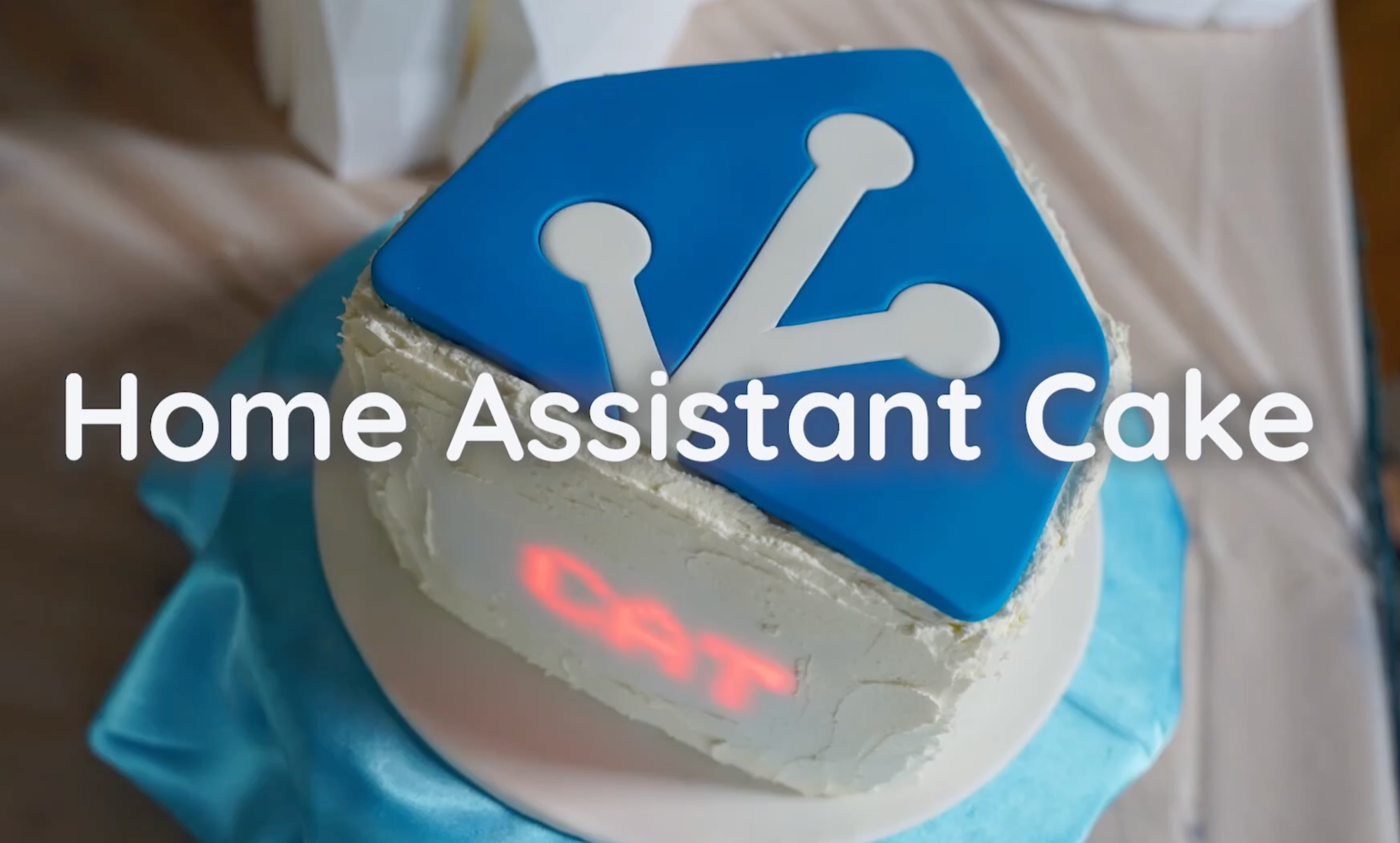
OK so we’ve all had a birthday cake with candles on it, but what about one that lights up from within? That’s exactly what @kattcrazy has made! 🎂
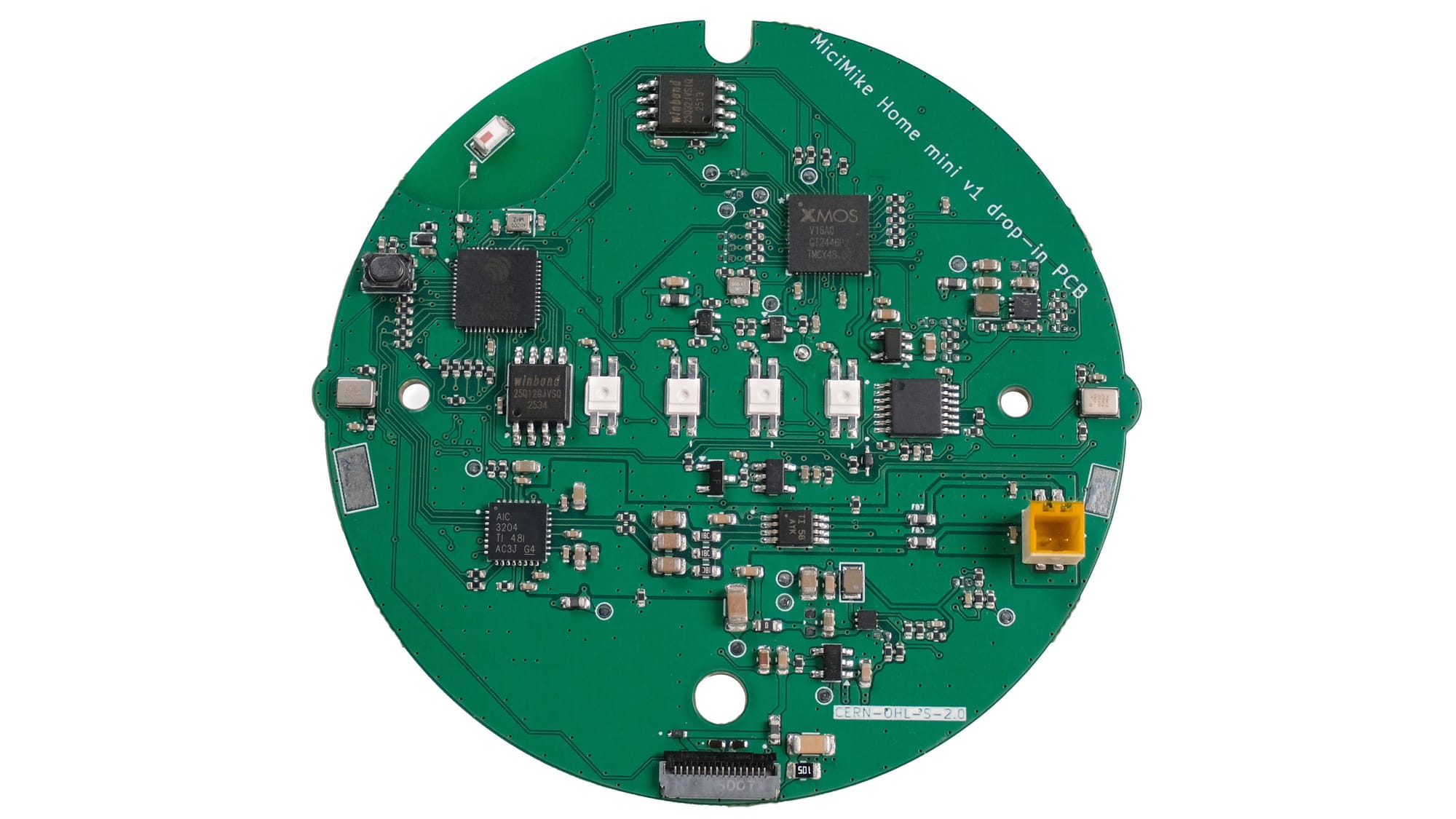
Give your old Google Home Mini a new lease of life with Imre Laszlo’s drop-in PCB: currently going down a storm on Crowd Supply!
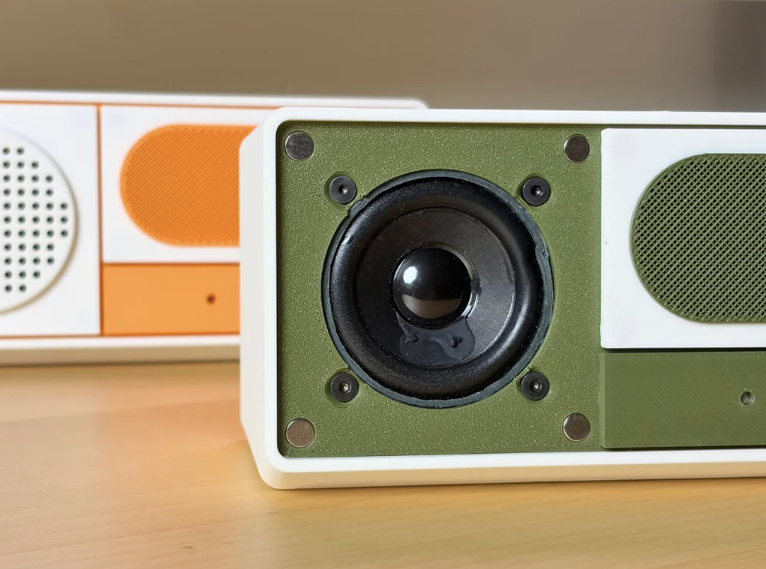
This beautiful ESPHome voice assistant by u/Icy_Alternative_1611 shows DIY voice control doesn’t have to look like a school science project.
Connect with us
Hit reply to say hi, or find us on your favorite platform...
|