Breaking free from the disposable smart home

Welcome to the June edition of the Open Home Foundation newsletter, the place to learn about the latest and greatest things for your smart home that improve its privacy, choice, and sustainability.
The newsletter is written by Paulus Schoutsen – President of the Open Home Foundation, and founder of Home Assistant. Was this email forwarded to you? Subscribe here!
Earlier this month was World Environment Day: cue corporate greenwashing on a global scale. It got me thinking about what sustainability means to us at the Open Home Foundation – and how we can break free from the endless cycle of disposable tech.
Breaking free from the disposable smart home
Big Tech brands want us to believe that buying their shiny new eco-friendly gadget is an act of environmental heroism. It isn’t. As our Home Assistant Lead Franck Nijhof recently put it, “a smart home will not save the planet by itself.”
Yet sustainability remains a core principle for the Open Home Foundation. Because while a single gadget won’t miraculously reverse climate change (and each can contribute to e-waste), we don’t believe having a smart home and helping the planet are mutually exclusive…
It starts with measurement
Sustainability means different things to different people. But at its root is the idea of keeping something going over the long term. This applies to household budgets, the lifespan of your devices – and the health of human societies and the planet we share. At the heart of this is where the smart home really shines, in a practical, grounded way. Like Franck says, it doesn’t start with magic, but measurement.
With a little planning, a smart home can show you how much you’re spending on heating, when to charge your car or run your dishwasher to soak up surplus solar energy, and what activities have the biggest impact on water usage or carbon emissions, among many other things. Boring-but-effective stuff.
Keeping good gear alive
We promote hardware like Home Assistant Green (designed and sold by our commercial partner Nabu Casa to help fund the foundation’s mission) to give people an easy, local starting point for their smart home. Our goal isn’t to get you to replace everything with brand new devices, but to make the most of what you already have. Because the most sustainable device is the one you already own ♻️
That’s the philosophy behind our recent updates to Home Assistant and ESPHome, designed to leave no hardware behind. By using inexpensive microcontrollers as local network proxies – think of them as bridges between offline devices like infrared remotes and your modern network – you can now reuse rather than replace your old favorites.
“Wait, that’s no different to my Broadlink remote,” I hear you cry! But here’s the exciting part: we’ve built this system to be so generic that it can work with all sorts of devices. Instead of forcing individual gadgets (like your Broadlink) to be smart, we’ve moved the logic directly into Home Assistant. It handles the heavy lifting, translating obscure device languages into clean, standardized messages.
We’ve already rolled this out for Bluetooth and Z-Wave, and have expanded into infrared and radio frequency. And because the tech uses basic building blocks like serial communication, our ultimate aim is to enable you to resurrect almost any legacy device you choose!
A different kind of magic
To truly break free from the disposable smart home, we need to expand the library of older devices that Home Assistant can communicate with: which is where you come in. Check out our latest blog post for a breakdown of how proxies work, and how to start building your own.
It’s a practical, fun project to get stuck into. And when you finally breathe new life into a beloved old device that’s been gathering dust for years… that really is a kind of magic 🪄
Tell me what you think!
I hope you’re enjoying reading this, but I’d love to be sure! Since we don’t use tracking, we’ve put together an anonymous survey to find out what our newsletter readers like and want. It should only take a few minutes, and your feedback will help shape what I write about next. Or, if you prefer the direct approach, just hit reply to this email. I’d love to hear from you!
Stop the press: SmartThings to charge for using community-built Home Assistant integration
This week’s episode of “How users don’t own cloud-powered products” is brought to you by Samsung SmartThings… They’re offering A New Enhanced API Experience transitioning to paid API tiers in October 2026. The wording of their update has caused some confusion, so I’ll be direct: use of the Home Assistant integration will be affected by their changes and will fall under their new “personal plans.”
We’re all for choice, but feel very disappointed that users will have to decide whether to shell out for access in the shadow of yet another cloud paywall. You don’t need to do anything right now, as SmartThings say access will remain free and uninterrupted until October. In the meantime, we’ll continue to advocate for local control that doesn’t cost you money, and update you when we know more.
Home Assistant 2026.6: Cards on the table
While the latest Home Assistant release is packed with new features, we’re especially excited to reveal our new card picker 🃏 Instead of selecting a card based on its type, now you can choose based on what you actually want to display, with a live preview to help you decide what’s right for your dashboard. Head to the release notes or video below to see what else we have up our sleeves.
Matter just got a major upgrade
This is a big one: Matter in Home Assistant has taken a huge leap forward, with our Matter Server (the engine behind Matter support in the platform) now running on matter.js. Expect faster startup, quicker device reconnections, tighter security, and support for the Matter 1.5.1 spec. Plus, a new live visualization shows your entire Thread or Wi-Fi network at a glance. Check out the details below.
Music Assistant 2.9: Discover your sound
This update brings you highly requested providers, Audio Analysis, and Smart Playlists – not to mention Sendspin visualizers and an updated Discover page. And there’s plenty more to explore: head to the notes or catch up on the release party to discover everything that’s new.
Can you sense a change in the air?
Because this month Sensereo joins the Works with Home Assistant program 🚨 Specialists in environmental sensing, Sensereo bring Matter-based smoke and carbon monoxide alarms to Home Assistant: all built to keep your home safe, from near and far. Check out the full blog below!
Community meetups
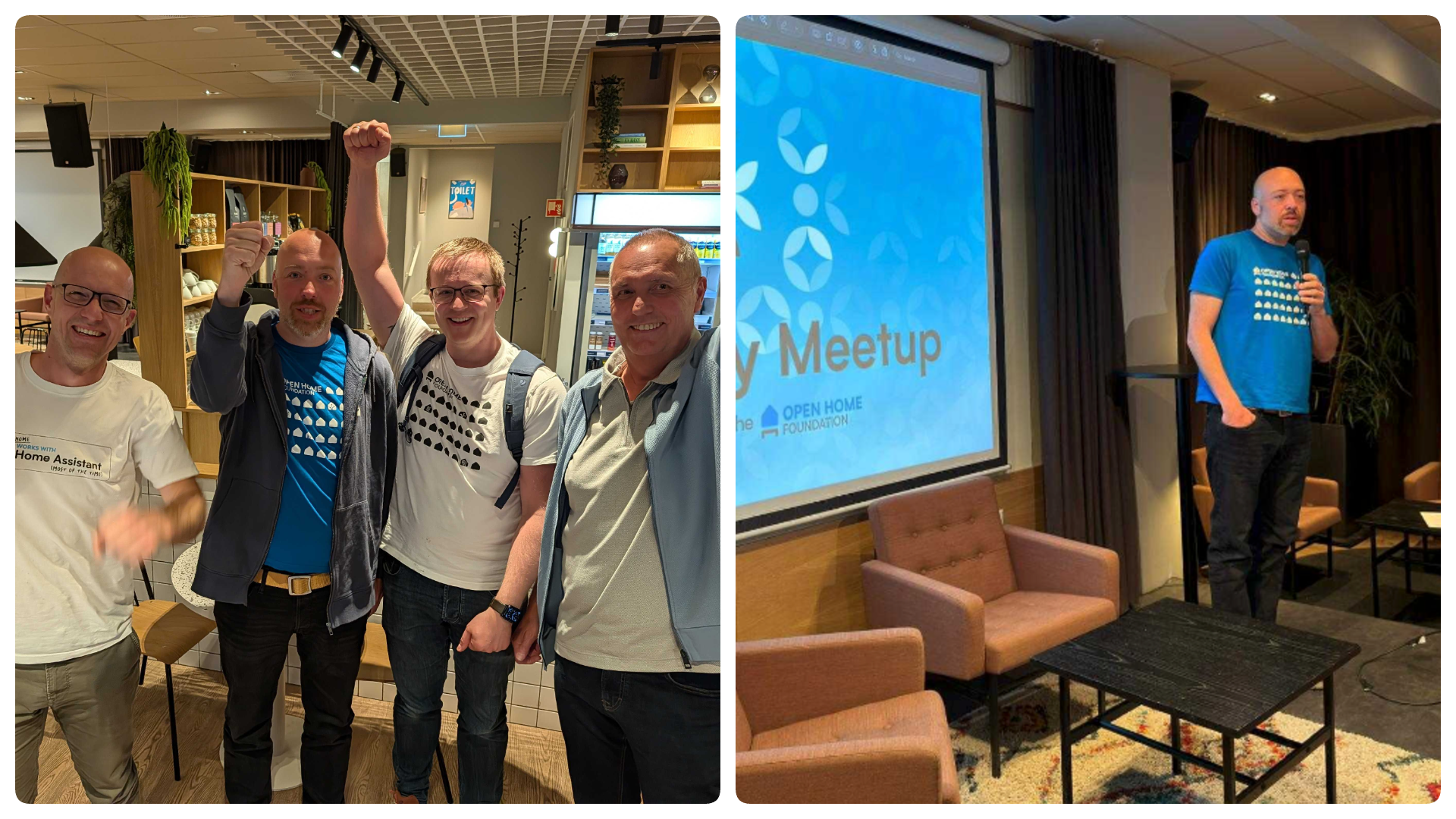
A warm welkommen in Oslo!
I was in Oslo last month for the first-ever Home Assistant meetup in Norway! Sixty-four participants, an hour-long Q&A that tested every inch of my knowledge, and the friendly vibe that makes these trips so worthwhile. Needless to say I was in my element! I also bumped into our Works with Home Assistant partners ELTAKO: in town for an electrical tradeshow…

When in Rome…
While I was in Europe I also joined the Nabu Casa crew for the Home Assistant meetup they were hosting in Rome. It was great to see so many people who care passionately about the ecosystem, and share our excitement about where it’s headed! Two cities, two great communities, and one shared vision 🙌
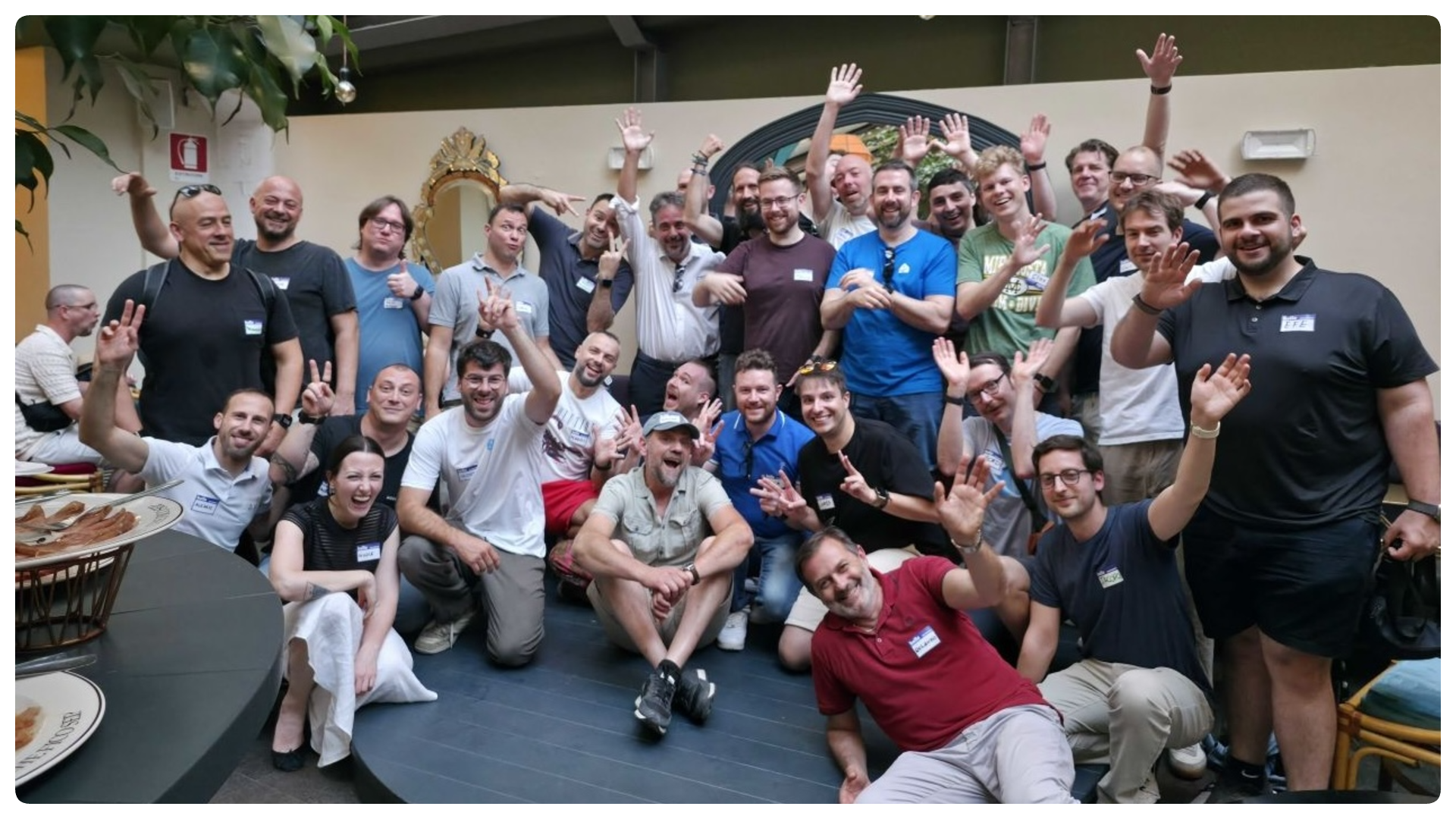
Find a meetup near you!
If the above has whet your appetite to talk about all things open source, our community has more meetups coming up, including another first: our debut event in Australia! So if you live near Pordenone, Budapest, Cologne, Newcastle, Kyiv, Sydney, or Berlin (at IFA, see below!👇), sign up now! If you’re interested in setting up your own event, learn more here.
Join us for a chat at IFA 2026!
As we flagged last month, we’ll be at IFA 2026 in Berlin from 4 to 8 September. If you’d like to stop by our booth at this mega home and consumer tech event, tickets are on sale now!
Help us build the Open Home
If you can’t make it to a meetup, never fear: there are lots of other ways to join our fight for privacy, choice, and sustainability in smart homes!

Shop our store
Show your love for our principles and projects with our range of high quality, ethically made apparel and accessories.
Support our work
Subscribe to Home Assistant Cloud or buy official Home Assistant or ESPHome products from our commercial partners.
Share your skills
Contribute code, translations, documentation, or designs to any of our projects – or sponsor a maintainer directly on GitHub or Ko-Fi.
In the news this month
Your smart home, in your language
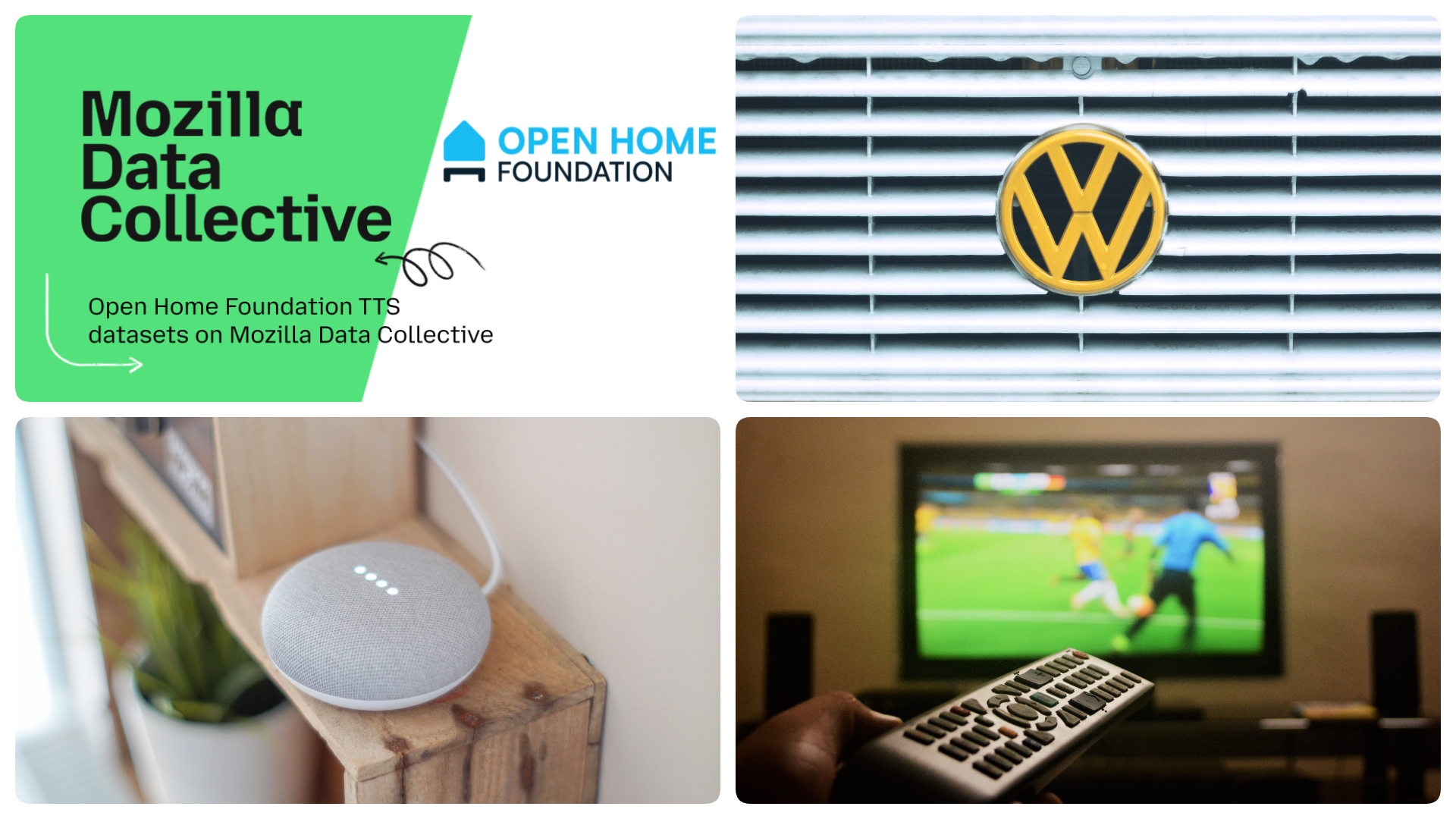
The majority of voice assistants are limited to a few languages – either because the training data doesn’t exist, or it’s locked behind a licence. So I’m delighted to say we’ve teamed up with the Mozilla Data Collective to drop 23 new open source text-to-speech datasets. This joint effort helps developers train lightweight, local engines in European languages including Slovak, Romanian, Hungarian, and Bulgarian. All free for anyone to use. Together, we’re making the Open Home truly global! 🌍
Volkswagen pulls plug on greener EV charging
Charging from solar surplus, avoiding peak demand, and feeding energy back into the grid: sustainability wins Home Assistant could enable with your Volkswagen EV 🏆 Until VW quietly killed the API that made it possible… Now the team behind EVCC – the open source charging tool at the center of the story – have launched a petition demanding all car manufacturers comply with the EU Data Act and give owners access to their own vehicle data.
EU opting for open source?
Good news for those of us who care about digital sovereignty. The European Commission’s new Technological Sovereignty Package proposes an EU Open Source Strategy: explicitly to cut vendor lock-in and build European-controlled alternatives. “This is about protecting our citizens, defending our interests and making our own choices,” says Commission President, Ursula von der Leyen. It’s something we’ve always believed in. Will the rest of the world take note?
Google empties the Nest
So Google has confirmed it has discontinued the Nest Mini and Nest Audio. Support continues for now, but we’ve seen how that story ends 👀 Conveniently the new Google Home Speaker went on sale around the same time. Let’s hope Nest owners realize their devices still work and an upgrade is a choice, not a necessity. And if stories like this are turning you off Google Home altogether, the replacement PCB we featured in last month’s issue offers a way out.
Bringing back some Harmony
I got a little misty-eyed listening to The Verge’s Version History podcast about the Logitech Harmony this month. We have history with this remote: back in 2018 the community fought to keep its local API open, and won 💪 A popular device that outlived its business model – and just the type of problem our proxies are designed to solve!
Home Assistant helping with dementia care
Nothing beats seeing people using Home Assistant to improve the lives of others. A smart home app being developed by researchers at Texas A&M University is a perfect example. Built using Home Assistant, it pulls together sensors, smart watches, and connected devices to help caregivers monitor safety risks for people living with dementia – exactly the kind of real-world impact that makes our work so worthwhile.
Community highlights
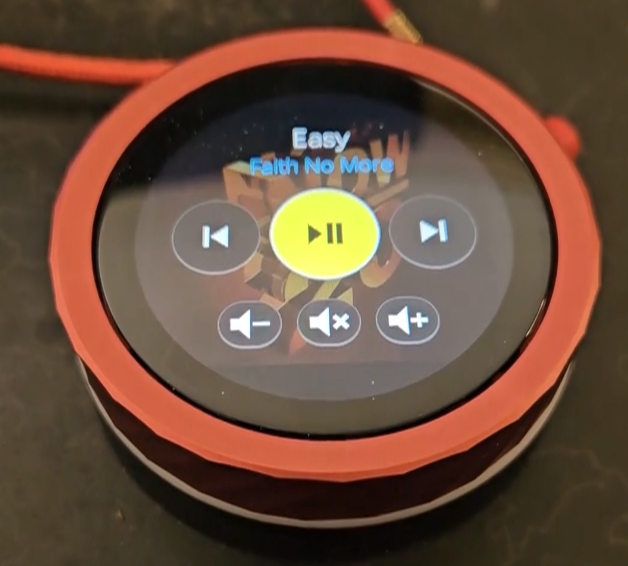
RealDeco’s ready-made web firmware sendspin-guition turns cheap touchscreen pucks (or any other amplifier) into local, synced multi-room audio players via the power of Sendspin: our fledgling open standard for the complete music experience throughout your home!

Our very own e-paper aficionado Guy Sie built a black-and-white e-paper frame from a Seeed reTerminal E1003 with ESPHome and Home Assistant: could you tell it’s not a real print?

Imagine what you could control with this clever little Home Assistant dial by u/AbbreviationsFit6561: lights, AC, music… Created from a M5Stack Dial using ESPHome and LVGL.
Connect with us
Hit reply to say hi, or find us on your favorite platform...
|