Meet our new partner: Apollo Automation!
Welcome to the December edition of the Open Home Foundation newsletter, the place to learn about the latest and greatest things for your smart home that improve its privacy, choice, and sustainability.
The Open Home newsletter is written by Paulus Schoutsen - President of the Open Home Foundation, and founder of Home Assistant. Was this email forwarded to you? Subscribe here!
We’re getting close to wrapping up 2025 here at the Open Home Foundation, but that doesn’t mean we don’t have any news left to share, in fact, we have a few surprises in store… So read on for what lies ahead in 2026 – we can’t wait to see where the next 12 months take us!
Announcing our second commercial partner
This month we’re rolling out the welcome mat for our new commercial partner: Apollo Automation! They will be our second commercial partner – our first is Nabu Casa, who make official Home Assistant products. Apollo will be following in their footsteps by building our first official ESPHome hardware, and contributing a majority of profits from those new products to support the foundation. And don’t you worry, they will continue making their Apollo-branded multisensors and other cool products, while also helping the foundation do groundbreaking things under the new ESPHome brand.
We grabbed a few minutes with co-founder Justin to chat about ESPHome, Home Assistant… and snowflakes. Let’s get to know the awesome team at Apollo a little better!
Who are Apollo Automation?
We’re six people located in Versailles, Kentucky, making privacy-first smart home sensors based on community feedback. Trevor (my co-founder) and I started Apollo in September 2023 in his basement with a simple goal: sell a couple hundred sensors and buy a boat (still don’t have one, sadly).
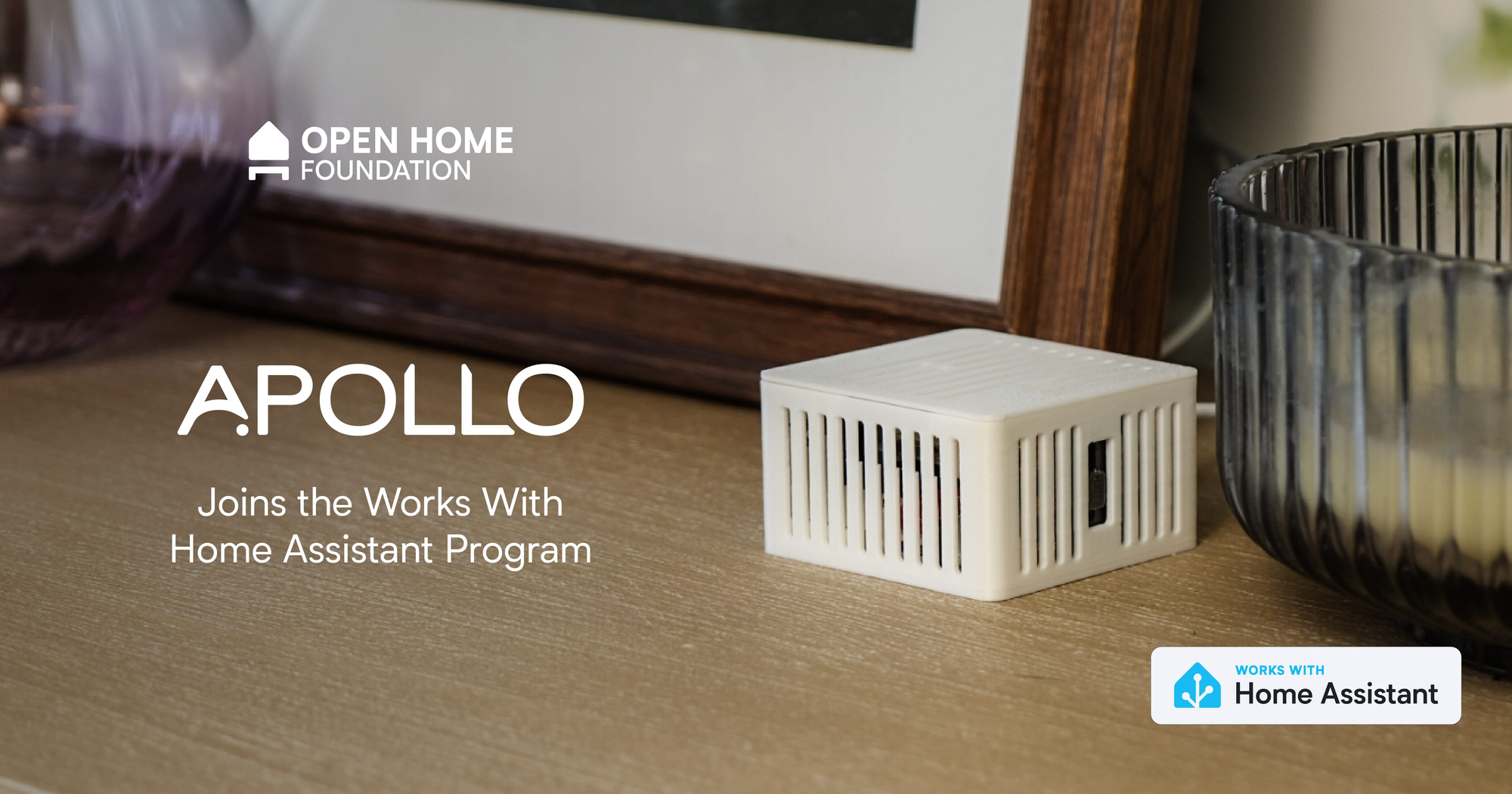
We posted our first product online, and found that people actually wanted it – suddenly we were assembling sensors every Saturday! We’re incredibly grateful for how the community has supported us. Now we have our own facility and joined both the Works with Home Assistant and Made For ESPHome programs – in fact, we were the first company with ESPHome-based devices in the Works with Home Assistant program 😁.
Tell us more about the team
Employee number one and the namesake of the company is Trevor’s German Shepherd dog, Apollo, who inspired our first logo. However, people kept thinking we were a pet company, so we had to update it.
Our team also includes Kyle running operations and the workshop, Brandon managing support and documentation, and Holly doing shipping and fulfillment. We design, engineer, and carry out the final assembly in-house here in Kentucky. Every product features 100% local control with no cloud or subscriptions.
What drew you to joining the Open Home Foundation as our second commercial partner?
Like I was saying before, we built our entire business on ESPHome and Home Assistant. When the opportunity came to support the foundation behind it all, it felt like exactly where we should be. These platforms gave us everything we needed to start, and we’re grateful to give something back. Supporting the ecosystem that made us possible is pretty special.
What’s Apollo hoping to bring as a commercial partner?
Three things:
- Funding for Open Home Foundation project development.
- Hardware that shows what’s possible with ESPHome.
- Inspiration for other makers to build on this platform. A thriving ecosystem benefits everyone.
How important was ESPHome and Home Assistant to starting Apollo?
Without them, we’d just be two guys tinkering in a basement. ESPHome gave us firmware, Home Assistant gave us a platform, and both gave us an incredible community with invaluable feedback. We owe everything to these projects.
As it’s nearly Christmas, tell us what every ESPHome fan should have on their list…
There are so many cool new ESPHome-powered devices to get this year! I’d recommend a Home Assistant Voice Preview Edition for every room in the house 😜, a cool ESP-powered e-paper display for a home dashboard, a Connect ZBT-2 to experiment with ESPHome OpenThread-powered devices, and, not really an ESPHome device, but a Connect ZWA-2 for that sweet, sweet Z-Wave long range.
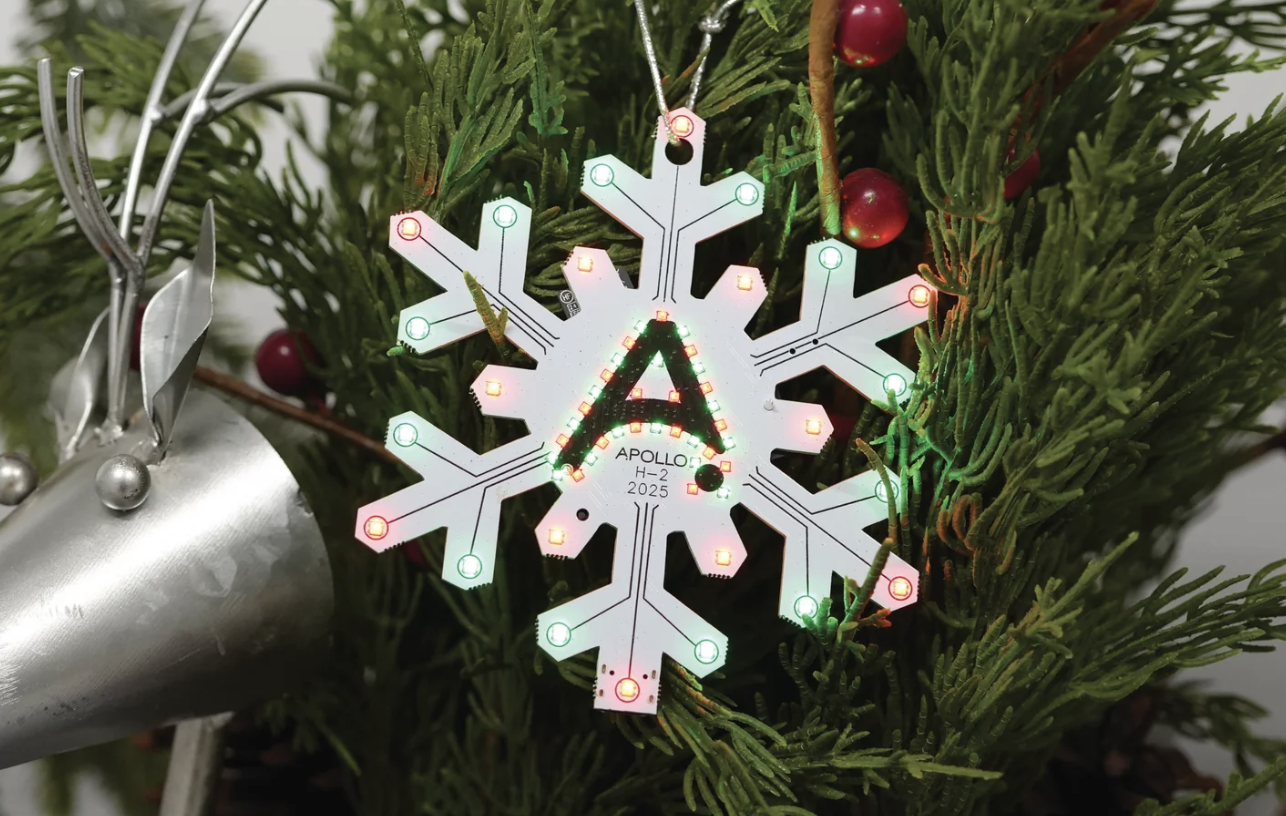
Oh, and one more thing, the H-2 Holiday Ornament – producing our snowflake-shaped tree decoration is another way we thank our supporters. This isn’t our first official hardware, but 100% of the profits are going to good causes, including the Open Home Foundation! ❄️ Happy holidays!
Waking up and making waves
It’s never too late in the year to expand our collection of more than 250 open standards, drivers, and libraries, and I’m happy to say there have been some great additions recently.
First up, microWakeWord, has been donated to us by its founder and maintainer Kevin Ahrendt. This open source, on‑device wake word engine is fast and accurate enough to run efficiently on regular ESP32 chips, and can handle three wake words at the same time – making it highly reliable for hands-free voice control without the need for cloud connection, or payment!
Z-Wave JS has also been donated to the foundation, thanks to its founder Dominic Griesel. Since 2018, this device driver add-on has been breathing new life into the Z-Wave ecosystem, allowing Home Assistant to communicate with thousands of devices more easily.
We’re really grateful to Kevin and Dominic for all the valuable work they’ve put in: Connect ZWA-2 wouldn’t have been possible without Z-Wave JS – and the same goes for Voice Preview Edition, which uses microWakeWord. Both projects are one-of-a-kind and vital to the Open Home, which is why we’re delighted they’ve been donated to us: it means no one can buy them and start charging for them. They will remain open source now and in the future, and we look forward to seeing how they develop in 2026! 👀
Our certified devices: more choice, less hunting
We’re celebrating what’s been a bumper year for our Works with Home Assistant program, with a record 12 new partners added in 2025 🥳. That’s a lot more devices you can be sure will work seamlessly in your Home Assistant smart home setup – devices with local-only operation and that uphold our principles of privacy, choice, and sustainability.
The only possible downside to all these devices is that it could get hard to find what you want… Well, we’ve thought of that! We’ve launched a searchable list of certified devices, complete with their availability, functionality, and protocol notes. Find out what else has been going on behind the scenes in our end-of-year wrap-up!
 Miranda Bishop
Meetups
Our community have some meetups coming soon, so always check our Luma calendar to see if there’s something in your area. If you live around Las Vegas, Brussels, Utrecht, Köln/Hürth, London, or Hasselt, sign up now! If you’re interested in setting up your own event, learn more here.


This month in the news

Rage against the garage door opener returns
What started as a warning on Home Assistant’s Reddit forum has reached the dizzying heights of the New York Times. Recently, community members spotted that Chamberlain Group’s new LiftMaster Security+ 3.0 protocol was replacing traditional wiring with encrypted Bluetooth. This move breaks local, subscription-free controllers such as RATGDO and Konnected, forcing users back into Chamberlain’s MyQ ecosystem – a service dependent on the cloud for basic functions, which has blocked Home Assistant users since 2023.
Seems like Brian X. Chen, the NYT’s lead consumer technology writer, had his own frustrations with the MyQ app, and covered the story featuring RATGDO’s Paul Wieland. It’s a case study in why we champion local control: it’s the only way to guarantee your privacy, choice, and sustainability of your hardware. It also – like many of the stories we cover in this newsletter – could be described as an example of “enshittification”, which leads us on nicely to...
…why everything is turning to shit
If you’re curious about the meaning of enshittification – and why wouldn’t you be, given the name – I recommend the recently published book by Cory Doctorow, who coined the term. Subtitled “Why Everything Suddenly Got Worse and What to Do About It”, it’s essential reading for anyone interested in why so many digital platforms start off great for users, but then gradually deteriorate over time.
Neato vacuums get a local lifeline
When Neato Robotics folded in 2023, their parent company Vorwerk vowed to provide five years of cloud support. Surprise, surprise, they’ve since backtracked, announcing a total cloud shutdown late this year. Without a fix, thousands of high-end vacuums were destined for the landfill.
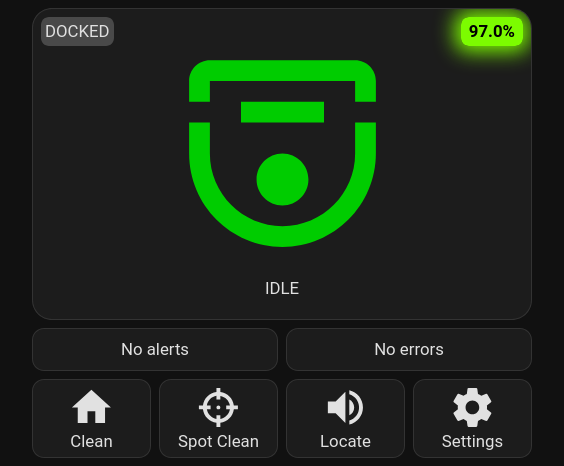
Enter Neato Connected V1.0. This community-driven project bypasses the dying servers, giving owners 100% local control via Home Assistant – pretty neat(o). By installing a small ESP microcontroller, users can revive bricked hardware and run it forever on a private network. It’s a massive sustainability win – proving that community innovation can rescue perfectly good hardware from corporate abandonment. 💪Visit Philip2809 GitHub to discover how to save your bot.
More vacuum news that sucks
Vacuums are certainly sucking up the headlines this month, with news that iRobot – makers of the Roomba and other smart home devices – has filed for bankruptcy and will be acquired by the company’s primary manufacturer and lender, China-based Picea Robotics.
Despite controlling 42% of the US market – and the name Roomba becoming pretty synonymous with robot vacuums (anyone remember DJ Roomba?) – iRobot’s value has crashed since 2021. The demise was sealed when iRobot’s lifeline – a $1.4 billion Amazon merger – was killed in January 2024 by European regulators over antitrust concerns, leading to the CEO’s resignation and mass layoffs.
While iRobot says the change won’t affect its existing products (sound familiar?), the Neato debacle proves owners should be nervous about losing app and cloud connectivity in the not-too-distant future. The good news is our community has shown it’s prepared to act: with Home Assistant integration offering local control for some of their vacuums. The community seems intent on rescuing Roombas from corporate abandonment, just as they did for Neato – watch this space!
Caught in transit: smart toilet’s privacy leak
There appears to be a theme developing in this newsletter 💩. Kohler Health’s $600 Dekoda smart toilet camera attaches to your toilet to take and analyze images of stools for gut health, and was marketed with promises of “end-to-end encryption” (E2EE). However, a recent investigation revealed that this claim was misleading. Security researcher Simon Fondrie-Teitler found the camera uses only basic HTTPS encryption (encryption in, erm, transit), which is standard for any secure website.

Kohler have since confessed they have to decrypt and process the images on their servers to give you results – meaning your business is no longer just your business. The company’s policy also notes your data may be used to train its AI models 🤢… illustrating that when companies promise high-tech health privacy, you probably need a second opinion.
The gift that keeps on giving: Home Assistant 2025.12!
We continue spreading the seasonal cheer with the latest Home Assistant release, which includes just a touch of festive flair… The team have been focused on giving you more control in a more intuitive way, and updates to automations are a big part of this. This release brings you purpose-specific triggers and conditions. No more wrestling with technical states – simply tell your system exactly what you want: e.g. “When a light turns on”, or “If the climate is heating”.
You can test this yourself in the new Home Assistant Labs – your own experimental zone where you can preview features before setting them free. And if you’re not in the Yuletide spirit just yet, try enabling new Winter mode, and enjoy the soothing sight of snowflakes drifting across your dashboard. It’s enough to make even the grouchiest Grinch feel warm and fuzzy inside. ✨
 Franck Nijhof
Community highlights

Most of us enjoy candy and cake during the holidays, but they’re not great for your blood sugar levels. A seasonal solution? This diabetic glucose-monitoring Christmas tree by @Verscreubulator.
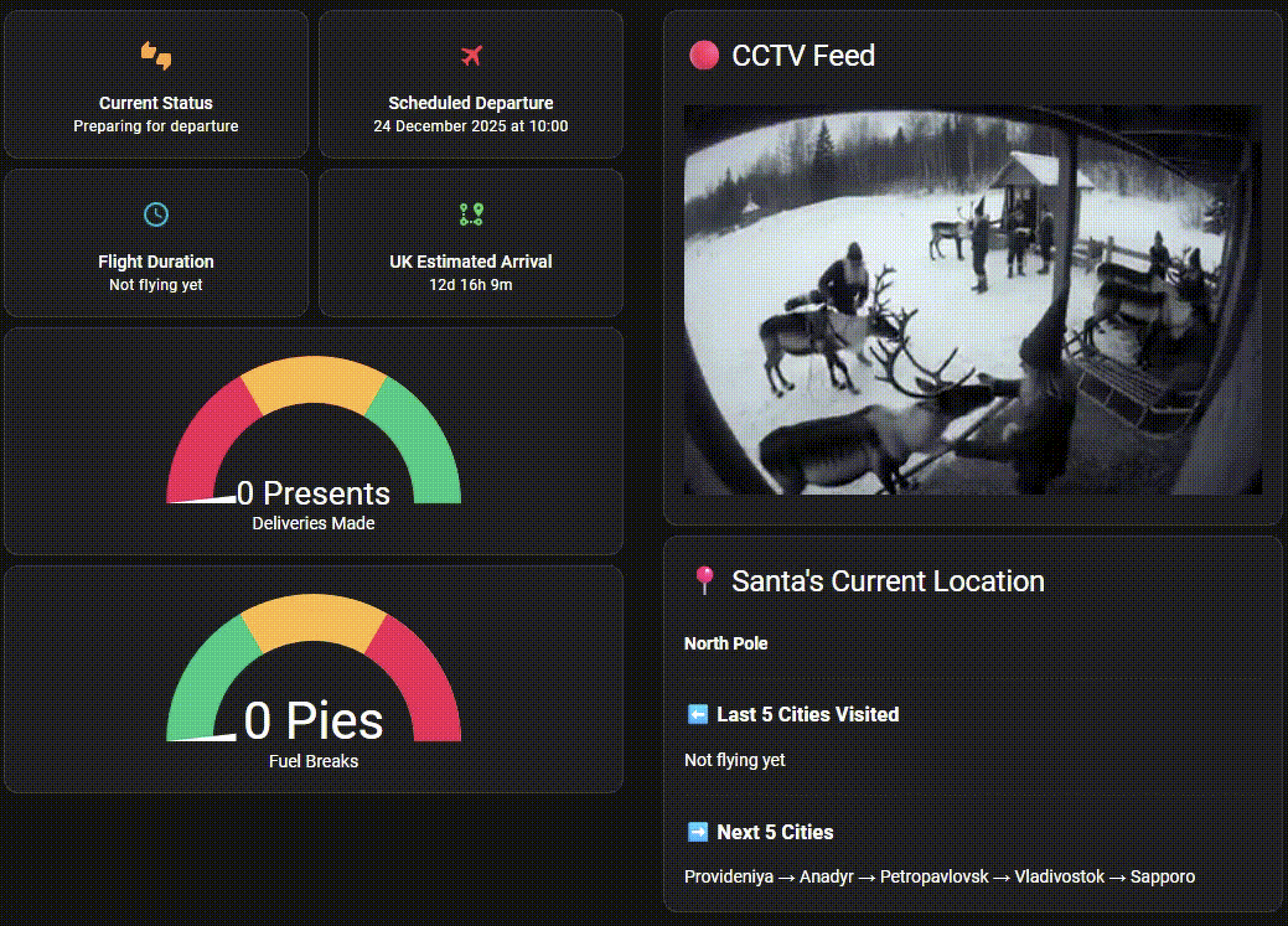
Keep tabs on Kris Kringle with @chrisefrost’s festive integration that follows Santa’s journey on Christmas Eve using the Google Santa Tracker API, complete with CCTV footage from the North Pole!
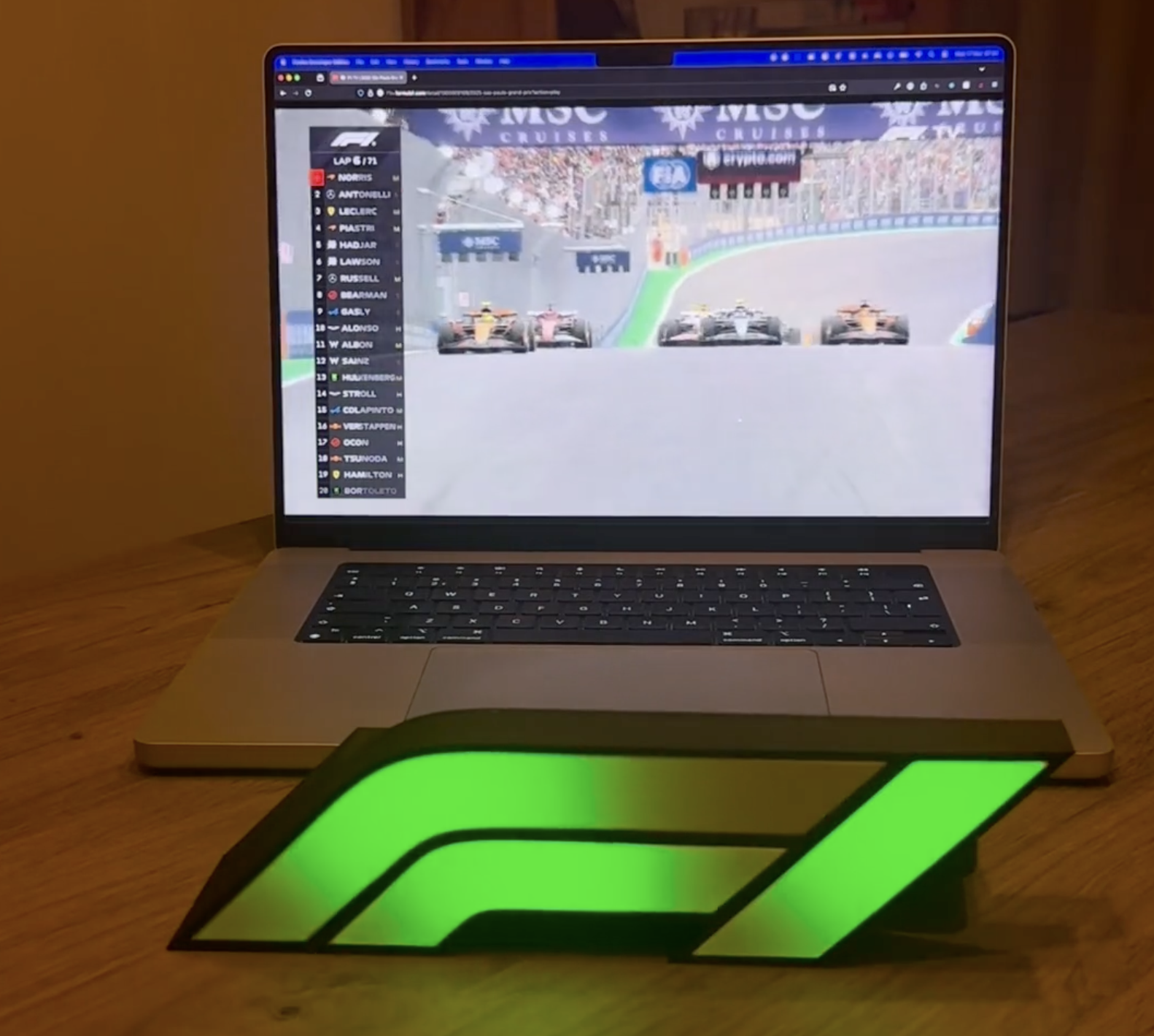
Fans of Formula 1 will love @joppedc’s dynamic F1 logo lightbox that changes colour according to race events. It only works with live races, so there’s plenty of time to build it before the next Grand Prix.
Enjoy this newsletter?
Support the Open Home Foundation, subscribe to Home Assistant Cloud
Forward to a friend, sharing is caring.
Anything else? Hit reply to send us feedback or say hello. We read everything!
|