The final frontier Big Tech won’t explore

Welcome to the February edition of the Open Home Foundation newsletter, the place to learn about the latest and greatest things for your smart home that improve its privacy, choice, and sustainability.
The Open Home newsletter is written by Paulus Schoutsen – President of the Open Home Foundation, and founder of Home Assistant. Was this email forwarded to you? Subscribe here!
With January behind us, the year’s picking up pace… and so are we! State of the Open Home is coming up fast on April 8, and there’s plenty of other news to share. But first, I want to talk about something that’s been on my mind: our core innovation that our competitors will never copy.
Our openness is our core innovation
I’ve been watching Big Tech’s attempts to compete in the smart home space for over a decade now, and there’s a pattern I find fascinating. They’ll copy features, try to improve their UIs, pour millions into voice assistants and AI integrations. They watch what we do, what our community builds, and try to replicate the results. But there’s one thing I’m confident they’ll never copy: being genuinely open.
Not because they can’t – openness isn’t technically difficult – but because they won’t.
Closed platforms are designed to serve their creators
Openness fundamentally conflicts with how Big Tech makes money. Close a platform, and the company controls the ecosystem. It decides which devices work, which developers get access, and which features require paid subscriptions. It owns the infrastructure, the relationship with users, and – crucially – it owns their data.
This is why Home Assistant is such a good foundation for a robust, sustainable, and private smart home. Because we’re open, we provide APIs for complete management – meaning you can access all your data and keep it under your control. You can also build any other smart home service on top, for example by using Google Home or Apple Home for voice control, or their UIs or automations, if you really want to. You get to choose what to do with your data.
In fact, we believe so strongly in your right to choose, it’s written into the Open Home Foundation’s principles – along with your rights to privacy and sustainability in your smart home.
Compare that with closed platforms: ecosystems like Apple or Google Home require you to use (and often pay for) their software and hardware to get your data – and, even then, they decide what you can or can’t access. And guess what? If you have a problem with their service that’s not deemed important enough to get on the radar of developers in Silicon Valley, it won’t get solved. You’re stuck, and that sucks.

Open platforms make dreams a reality
But building a completely open smart home with Home Assistant is about more than avoiding lock-in. It gives you the freedom and flexibility to explore whatever the future brings...
A few years ago, the idea of an AI assistant for your home seemed like science fiction. Now it’s become a reality. And for those of us who grew up with Star Trek (the Next Generation, I’m not that old!), it’s exciting, not scary. That show gave us a universe where AI enhanced human capability rather than replaced it. Where Picard could say “Tea, Earl Grey, hot” and the computer would comply. That’s what openness enables: technology that helps you achieve your vision, not one that decides for you.
Back on planet Earth, YouTuber Paul Hibbert “made it so” by using Home Assistant to build a Ready Room-style office that responds to “Computer, Red Alert” by flashing every light red in the room (although thankfully it’s just the household signal for teatime, rather than a Romulan attack).
The point is, whether you’re living out childhood sci-fi fantasies or just want help with a complex migration, you need a platform that puts you in control.
That control only exists because we build in the open: not just with open source code, but through open decisions and discussions with the community about where we’re headed. We’ll be doing all that in person at State of the Open Home in Utrecht, the Netherlands, on April 8. If you’d like to join us, tickets will be available soon!
Show your support with swag!

We couldn’t pursue our mission to keep smart homes open and in your hands without our community’s help – so we’re excited to share a new way you can get involved. Whether you regularly contribute code, or simply use Home Assistant to keep your lights on, shopping at our merch store gives you the chance to support the foundation, and snag some quality, sustainable swag that shows what you stand for. Head over to our new site to see what’s in store!
 Paulus Schoutsen
Sharing the love for Home Assistant 2026.2!
OK so Valentine’s Day was last week, but there’s still lots of love in the air for our latest Home Assistant update 🥰. If you didn’t tune in to our release party live, watch the replay (or read the notes if you’re in a hurry!) to discover the new dashboard, why Add-ons are now Apps, and how you can help us build a device database...
 Franck Nijhof
Meetups
Our community have some meetups coming up, so always check our Luma calendar to see if there’s something in your area. If you live around Köln/Hürth, Jefferson City, MO, London, or Hasselt, sign up now! If you’re interested in setting up your own event, learn more here.
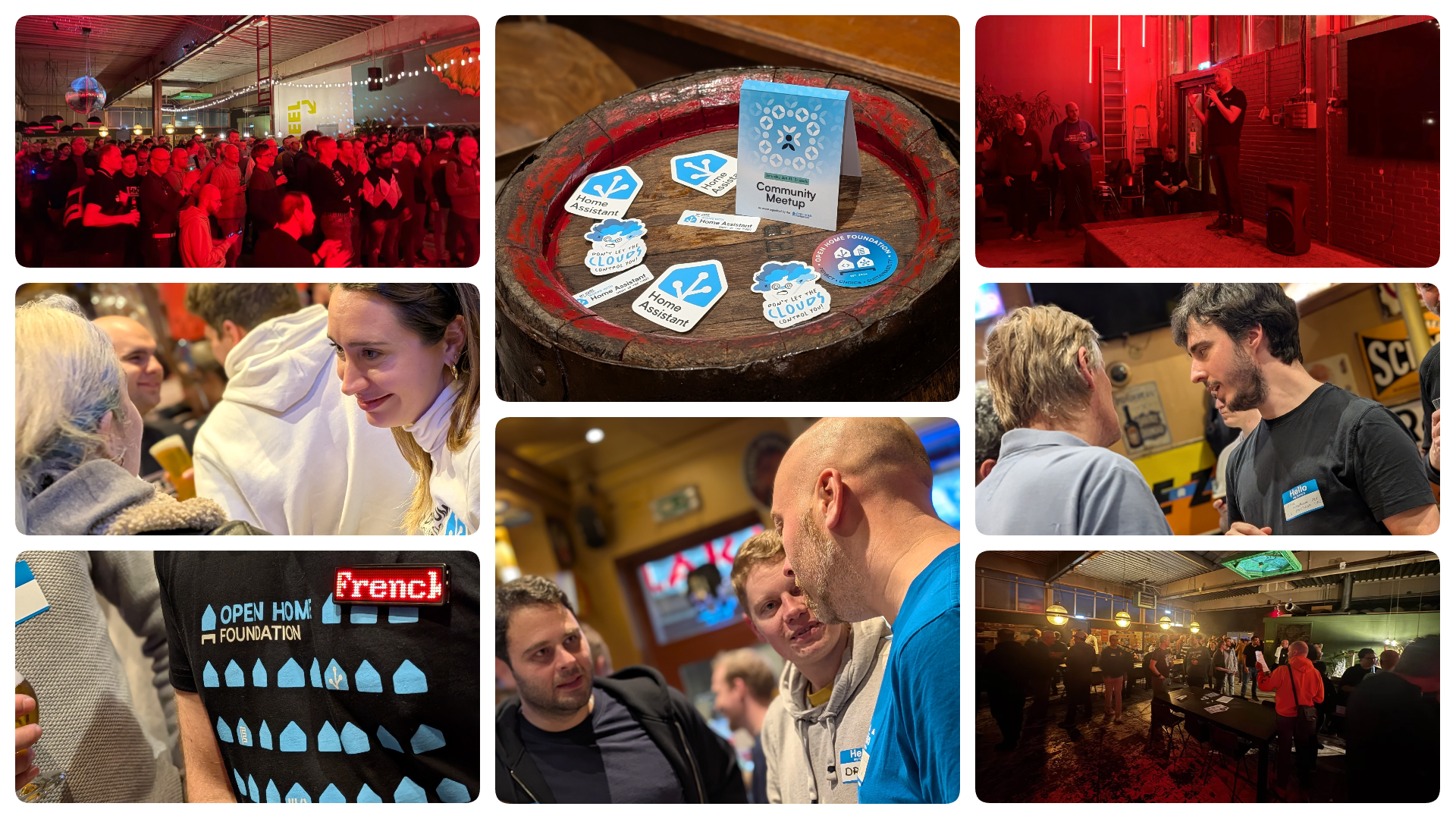
And if you’ve never joined us before and are curious about what goes on, check out our pics from recent meetups in Brussels and Utrecht! I was lucky enough to attend both, and it was great to talk to so many members of the community, and our partners from Apollo, IRL – we had a blast!

This month in the news

People power pushes Ring retreat
Last month we covered the backlash against Amazon Ring’s Flock partnership. Now it’s been canceled before it even launched, with Ring claiming it “required more resources than anticipated”. Sure. The real story: public pressure works. Activists called for device boycotts, Ring’s Super Bowl ad for its new Search Party feature sparked mass surveillance fears, and the company backed down. This round to privacy advocates. But cloud-based cameras remain problematic. This month alone: the FBI recovered “deleted” footage from a Google Nest doorbell using “residual data”, and a tinkerer using a PS5 controller to operate a DJI Romo vacuum ended up accidentally accessing 7,000 other devices, including live camera feeds and floor plans…
Stop the press! As we prepare to publish, a leaked internal email has emerged, where Ring’s founder Jamie Siminoff tells employees the Search Party feature is “first for finding dogs”, but could expand to “zero out crime in neighborhoods”. Looks like this is a saga that will keep rumbling on...
The truth about renewables
This video from Technology Connections really is worth an hour of your time. It makes the economic case for solar and batteries – not because the environmental argument isn’t compelling (it’s what drives our sustainability principle), but because money’s the only language many in power understand. The core point is renewables are a one-time investment lasting decades, while fossil fuels disappear as we use them, requiring endless extraction. It’s a perspective that aligns with ours: building durable things beats disposable energy.
Alexa, plus forced updates
Amazon’s rolling out Alexa+ to all Prime members, whether they want it or not! In fact, people who declined the upgrade are finding it installed on their devices overnight, complete with a “sassy teenage voice” that has irritated some users, to put it mildly. You can switch back (for now), but it’s a useful reminder that when companies control the platform, they control the experience.
Z-Wave gets more powerful
Good news for those of you running complex Z-Wave setups! Z-Wave JS UI is now built into the official Home Assistant Z-Wave JS app.
Previously a separate install, this advanced management interface gives you pro-level network diagnostics, detailed device configuration, and better troubleshooting tools: all optional, all integrated – thanks to Dominic Griesel for getting us there!
Ikea’s Matter launch: iteration in action
Ikea’s highly anticipated Matter devices using Thread have had some teething troubles, with connection failures, devices dropping off networks, and pairing problems. While I’m disappointed such issues made it to market, using open standards at least means they should be easier to iterate and fix, as Ikea is doing by working with the Connectivity Standards Alliance (CSA). This is the kind of collaborative problem-solving we want to see more of in the smart home industry (though ideally before products launch!).
Chipping away at open protocols?
Silicon Labs makes many of the chips that power Matter, Thread, Zigbee, and Z-Wave: the protocols running in countless smart home devices… and is being taken over by Texas Instruments. The $7.5 billion deal is expected to close in early 2027, and while it’s too early to say what this means for these open protocols, we’ll be watching developments closely 👀.
Another enterprising project…
If you don’t have space for the full-on Ready Room experience, you can still bring a touch of Trek into your home. The Verge’s Ursa Wright built a pixel-perfect LCARS control panel using ESPHome and LVGL on a 7” touchscreen. It controls her living room lights with authentic Star Trek buttons and gauges: completely impractical, joyously nerdy, and only possible because Home Assistant lets you build exactly what you want.
Community highlights
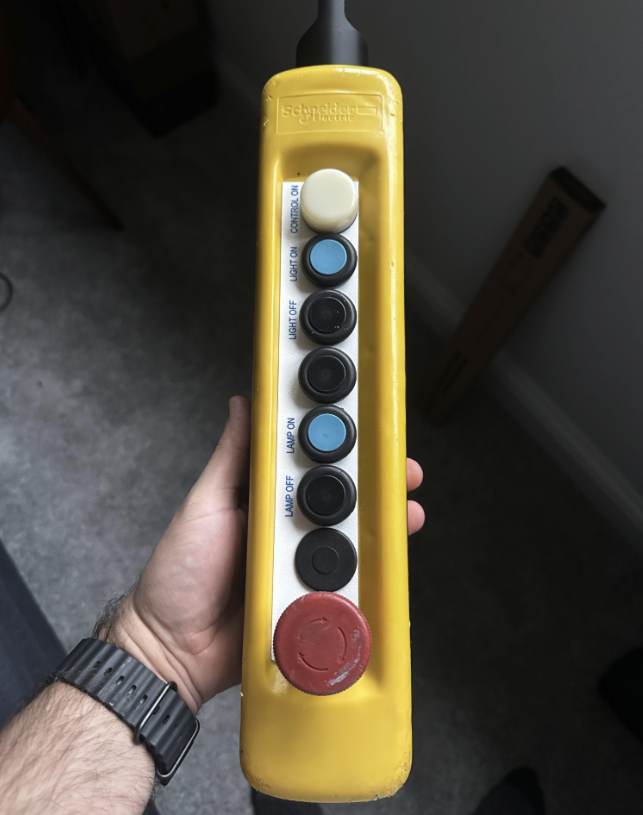
Space-age touchscreens are all very slick, but if you miss something chunkier, u/Confident-Substance transformed an old crane pendant into a Zigbee smart home controller, complete with big red emergency stop that, uh, turns off a light.
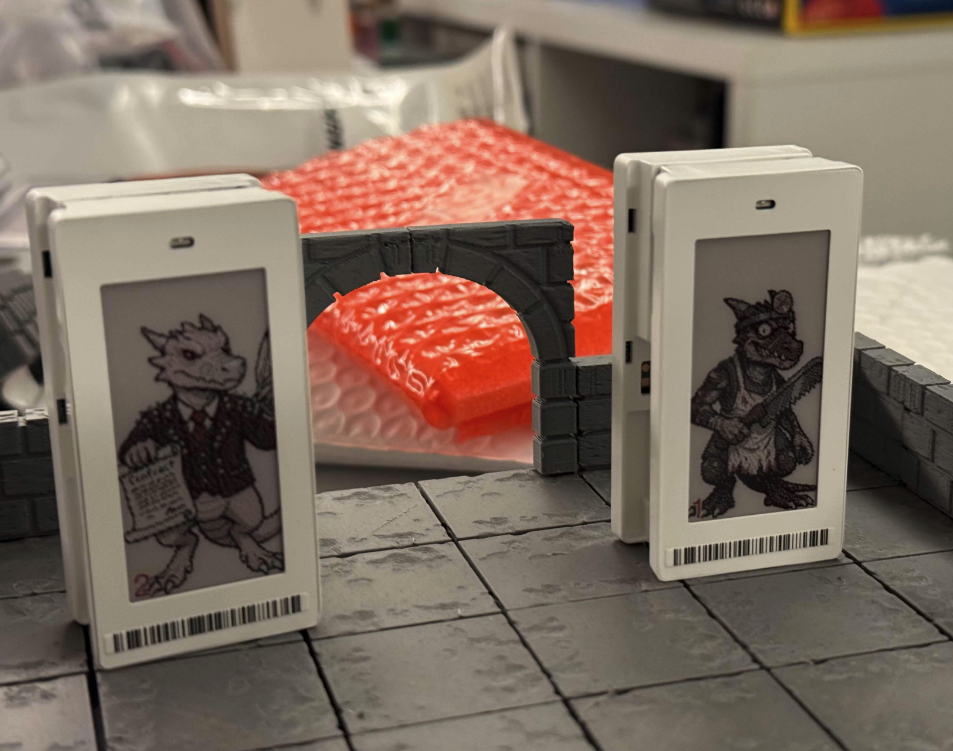
📢 Attention Dungeons & Dragons fans: ratsark’s MonsterGen uses a combo of AI, mini e-ink displays, and Home Assistant (of course) to create digital enemy monster cards that you can change as you play!
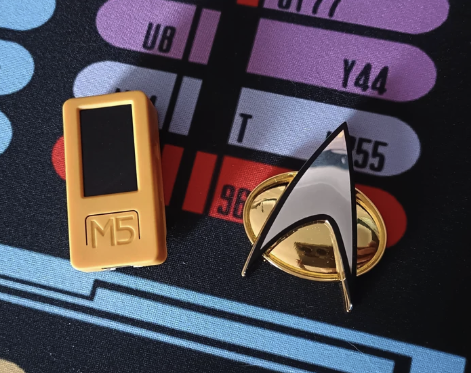
Since we seem to have a Star Trek theme this issue, let’s finish at maximum warp: u/graffitiwriter turned an M5StickC PLUS2 into a wearable comm badge for Home Assistant voice control: simply tap to “engage”.
Enjoy this newsletter?
Support the Open Home Foundation, subscribe to Home Assistant Cloud.
Forward to a friend, sharing is caring.
Anything else? Hit reply to send us feedback or say hello. We read everything!
|